Sustainable Catering Supplies for Businesses: 2026 Guide
September 3, 2026 · Editorial Team

Table of Contents
- Why Sustainable Catering Supplies Matter for Your Business
- Understanding Certified Compostable Food Packaging
- Top Sustainable Catering Supply Options
- Waste Reduction Strategies for Corporate Catering
- Reusable Stainless Steel Catering Options
- Cost-Benefit Analysis: Sustainable vs Conventional Supplies
- How to Verify Greenwashing and Ensure Genuine Sustainability
- Conclusion
- Frequently Asked Questions
Last Updated: September 3, 2026
Why Sustainable Catering Supplies Matter for Your Business
Catering businesses face mounting pressure to reduce environmental impact. Disposable packaging accounts for a significant portion of food service waste, with single-use plastics lingering in landfills for decades. But switching to sustainable catering supplies isn't just an environmental decision, it's a business one.
At Biodegradable Packaging AU, we help cafes, restaurants, and caterers across Australia to embrace a circular economy with certified compostable foodservice packaging. More importantly, they're future-proofing themselves against tightening packaging regulations.
The shift toward sustainable catering supplies for businesses reflects a broader market reality. Customers increasingly expect eco-conscious choices, and regulatory frameworks continue to tighten. What once felt optional is becoming essential. Below, we'll walk you through certified compostable options, practical waste reduction strategies, and how to spot greenwashing so you can make informed decisions for your operation.
Understanding Certified Compostable Food Packaging
Compostable packaging breaks down into organic matter in the right conditions, but not all compostable packaging is created equal. The critical distinction lies in how and where it actually decomposes.
Home vs Industrial Composting Standards
Home compostable packaging degrades in backyard compost bins, typically within 6-12 months at temperatures between 20-30°C (standards.org.au). This sounds appealing, but most households don't maintain active compost systems. Industrial composting operates at higher temperatures (55-65°C) and controlled moisture levels, breaking down certified materials in 90-180 days.
The problem: many compostable products certified for industrial use won't break down in home systems. If your catering packaging ends up in someone's home bin, it won't decompose as promised. Conversely, home-compostable products are rarer and typically more expensive.
For business catering, industrial composting is the realistic pathway. Your packaging needs certification for industrial facilities, which are increasingly available across major metropolitan areas. Check your local council's composting infrastructure before committing to any supplier.
Australian Certification Standards
The Australian Standard AS5810 certifies home compostable products. AS5811 certifies industrial compostability. These are the only standards that matter for your purchasing decisions in this market.
Products carrying these certifications have been tested and verified to break down within specified timeframes under defined conditions. Without these marks, claims of compostability are unverified. Some suppliers reference international standards like EN 13432, which are valid but less relevant to your local composting infrastructure.
When evaluating sustainable catering supplies for businesses, always look for AS5810 or AS5811 certification on packaging. This single detail separates genuine products from greenwashing.
Top Sustainable Catering Supply Options
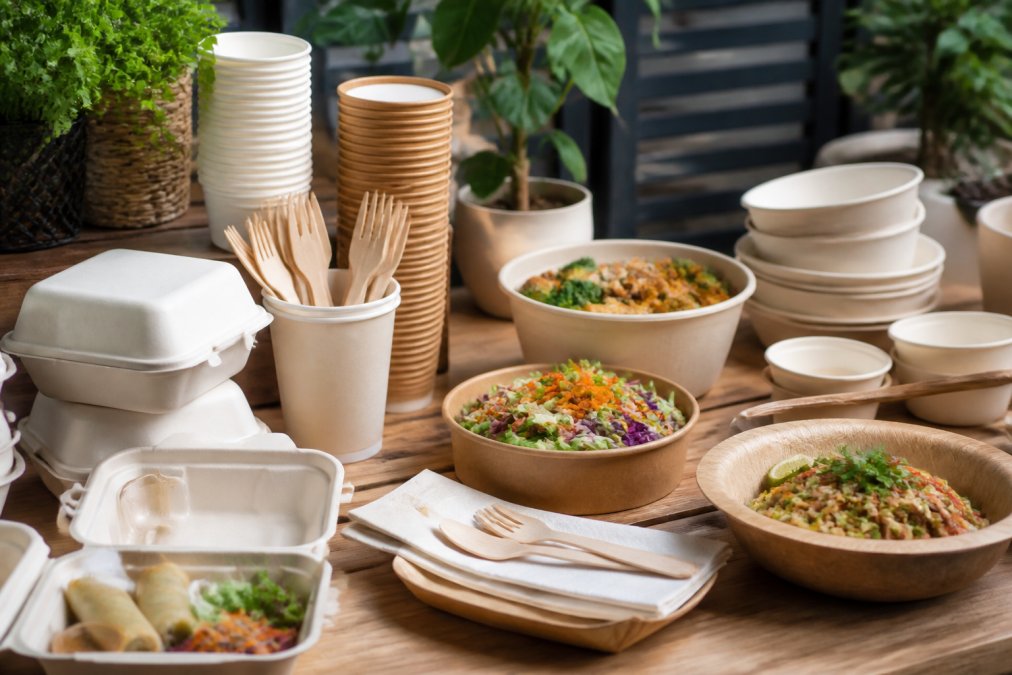
1. Compostable Catering Trays and Lids
Compostable catering trays form the backbone of sustainable food service. They're durable enough for hot and cold foods, stackable for storage, and certified to break down in industrial composting facilities.
The Large BioBoard Catering Tray Base starts at $45.40 and is made from sustainably sourced FSC-certified paper. It's home and industrially compostable, and recyclable in kerbside recycling if clean. The matching Large BioBoard Catering Tray PLA Window Lid runs $39.30 and features a plant-based bioplastic window, ideal for displaying prepared food while keeping it visible to customers.

What makes these stand out: they handle both hot and cold applications without the chemical linings that trap conventional trays in landfill. The PLA window is plant-derived, not petroleum-based, though it does require storage below 35°C to prevent softening.
For larger catering operations moving bulk meals, the Carry Tray Box at $67.00 offers a sturdy recycled paperboard solution with a die-cut handle. It's perfect for transporting items like chicken wings or burger meals and is recyclable if not contaminated with food.
2. Plant-Based Sauce and Sample Cups
Small portions demand small containers. Plant-based sauce cups eliminate the plastic waste from condiments and samples while maintaining food safety standards.
The 90ml Natural Plant Fibre Sauce BioCup costs $80.85 and is made from rapidly renewable sugarcane pulp, a by-product of sugar refining. The 120ml version runs $90.05. Both are industrially compostable and eliminate the need for single-use plastic sauce containers that pile up across a busy catering operation.
Pair these with the 90mm Large Natural Reclosable Plant Fibre BioCup Lid at $112.00. This lid is certified home compostable (AS5810) and features a hinged leak-proof seal that reduces spills, critical for delivery operations where containers shift during transport. The reclosable design also works for hot beverages if you're running a cafe or coffee service alongside catering.
These cups address a genuine pain point: sauce containers are high-volume, low-value items that most businesses never think about optimising. Switching here creates noticeable waste reduction without disrupting your main catering workflow.
3. Sustainably Sourced Wooden Cutlery
Wooden cutlery eliminates the plastic fork-spoon-knife sets that define single-use disposables. FSC-certified birchwood cutlery is durable, compostable, and carries strong brand messaging.
The 16cm Wood Knife, Fork & Napkin Set runs $54.45, while the full 16cm Wood Knife, Fork, Spoon & Napkin Set costs $96.15. For premium catering events, the 16cm Wood Knife, Fork, Spoon, Napkin, Salt & Pepper set at $103.75 includes condiments in a single bundle.
Wooden cutlery works best for events where customers expect a more refined presentation. The material feels substantial and signals environmental consciousness without requiring explanation. However, wooden cutlery isn't ideal for wet foods or prolonged soaking, it's best suited to structured catering where items are consumed relatively quickly.
4. Plastic-Free Bowls for Casual Catering
For salads, sides, and casual service, plastic-free bowls replace conventional disposable options without sacrificing practicality.
The 20 Pack - 500ml White BioBowl at $12.50 per pack offers plastic-free bowls made for everyday meals and casual catering. Each carton includes four packs (80 bowls total), making them cost-effective for high-volume operations. They're ready to grab, use, and stack away, ideal for party spreads, picnic servings, or takeaway sides.
These bowls address the mid-tier catering segment where customers expect basic, functional service. They're not premium or branded, but they're genuinely sustainable and priced competitively for bulk catering operations.
Waste Reduction Strategies for Corporate Catering
Switching to compostable packaging is only half the equation. Waste reduction strategies amplify the environmental benefit and often reduce costs.
Start with a waste audit. Track what your operation actually throws away for one week: food scraps, packaging, napkins, utensils, everything. Most catering businesses discover that 40-50% of their waste is avoidable, over-portioning, unused condiments, or packaging that could be eliminated entirely.
Implement portion control by training staff on realistic serving sizes. Many catering operations over-portion out of habit, assuming larger portions signal quality. In reality, customers prefer appropriate portions that they actually finish. Smaller portions reduce food waste, lower costs, and make your catering more sustainable simultaneously.
Bundle items intelligently. Instead of individual sauce cups, napkins, and utensils, consider providing them on request. A simple "Would you like napkins?" at service dramatically reduces waste for customers who don't need them. This approach requires staff training but pays dividends in waste reduction.
Partner with local composting facilities before committing to compostable packaging. Verify they actually accept the specific materials you're purchasing. Some councils have limited composting infrastructure, and sending "compostable" packaging to landfill defeats the purpose entirely.
Document your waste reduction efforts. Track baseline waste volumes, measure improvement after implementing strategies, and communicate results to clients. Many corporate clients specifically request sustainability reporting, this data becomes a competitive advantage.
Reusable Stainless Steel Catering Options
Reusable systems replace disposables entirely, though they require infrastructure and customer cooperation.
Stainless steel catering equipment, serving utensils, trays, and containers, eliminates single-use packaging for on-site events. For mobile catering or delivery-based services, reusable containers require a return system. Customers must bring containers back, which works well for corporate lunch programs or subscription meal services but fails for one-time events.
The economics of reusable systems depend on return rates. If you lose 20-30% of containers annually, the cost advantage disappears quickly. Successful reusable programs include deposit systems, branded containers that customers want to keep, or integration with subscription services where returns are built into the model.
Reusable stainless steel works best when combined with compostable packaging. Use stainless steel for the structure (serving trays, utensils, containers) and compostable materials for single-use elements (napkins, sauce containers, liners). This hybrid approach maximises waste reduction without requiring perfect customer behaviour.
Cost-Benefit Analysis: Sustainable vs Conventional Supplies
The upfront cost of sustainable catering supplies typically runs 10-25% higher than conventional alternatives, depending on the specific product category. However, this calculation misses several factors that shift the economics.
Material costs are just one component. Consider regulatory compliance: packaging regulations continue tightening across Australia. Businesses using conventional plastics may face restrictions or bans within 2-3 years, forcing costly transitions. Starting with certified compostable options now avoids scrambling later.
Brand value matters. Customers increasingly associate sustainable practices with quality and care. Catering businesses that visibly use compostable packaging can report higher customer satisfaction and stronger repeat business. This isn't quantifiable in a simple cost comparison, but it's real.
Waste disposal costs often decrease with sustainable supplies. Industrial composting is increasingly cheaper than landfill disposal as councils invest in composting infrastructure. Some councils offer rebates or reduced tipping fees for businesses diverting waste from landfill.
Storage efficiency also favours some sustainable options. Compostable trays often stack more efficiently than conventional alternatives, reducing storage space requirements. For catering operations with limited storage, this translates to real savings.
The honest calculation: sustainable supplies cost more per unit, but the total cost of ownership (including compliance, brand value, disposal, and storage) is often comparable or lower over a 2-3 year period. This is why businesses that make the switch rarely revert to conventional packaging.
How to Verify Greenwashing and Ensure Genuine Sustainability
Greenwashing, making false or misleading sustainability claims, is rampant in food service packaging. Three practical checks separate genuine products from marketing fiction.
Check 1: Certification Marks
Legitimate compostable packaging displays AS5810 or AS5811 certification on the packaging itself. These certifications are independently verified and traceable. If packaging claims to be compostable but lacks these marks, it's unverified at best, false at worst.
Be sceptical of vague claims like "eco-friendly," "green," or "sustainable." These words have no legal definition. "Compostable" is specific and certifiable; everything else is marketing language.
Check 2: Material Transparency
Genuine suppliers clearly state what their packaging is made from. Plant-based bioplastics, FSC-certified paper, sugarcane pulp, these are specific materials with traceable sourcing. Vague descriptions like "natural materials" or "plant-based plastic" without detail are red flags.
Ask suppliers for material safety data sheets and certification documentation. Legitimate businesses provide this information freely. Resistance or deflection suggests the product doesn't withstand scrutiny.
Check 3: End-of-Life Verification
The strongest greenwashing indicator is packaging that claims compostability without specifying where it actually composts. Genuinely compostable packaging works in specific conditions (home or industrial) that you can verify locally.
Contact your local council's waste management team or local composting facilities. Ask whether they accept the specific packaging you're considering. A supplier that can't connect you with actual composting pathways in your area is selling a theoretical product, not a practical solution.
Conclusion
Switching to sustainable catering supplies for businesses isn't a trend, it's the direction the market is moving. Regulations will tighten, customers will expect it, and disposal costs will shift in favour of composting. The businesses that move now avoid disruption and capture competitive advantage.
Biodegradable Packaging AU offers certified compostable catering trays, plant-based sauce cups, sustainably sourced wooden cutlery, and plastic-free bowls specifically designed for catering operations. Our products carry AS5810 and AS5811 certifications, ensuring they actually break down in local composting infrastructure. With free Melbourne metro delivery on orders over $200 and custom branding options, we help your business divert waste from landfill while strengthening your brand positioning. Start with one product category, compostable trays or wooden cutlery, and expand from there. The transition is simpler than most businesses expect, and the results are measurable.
Frequently Asked Questions
Q: What's the difference between compostable and biodegradable catering supplies?
A: Compostable supplies break down completely into natural materials within a specific timeframe (typically 180 days) in industrial composting facilities, leaving no toxic residue. Biodegradable supplies break down over time but may leave microplastics or take decades in landfill conditions. For certified compostable food packaging, look for AS5810 (home compostable) or industrial composting certification to ensure your waste actually breaks down properly rather than persisting in landfill.
Q: How do I verify if catering supplies are truly compostable in Australia?
A: Check for third-party certifications from bodies like the Australasian Bioplastics Association or certification marks for AS5810 (home compostable) and AS5338 (industrially compostable). Verify that your local council's composting facility accepts the specific material. Contact your waste management provider to confirm end-of-life disposal logistics before switching suppliers. Greenwashing is common, so request certification documents directly from manufacturers rather than relying on marketing claims alone.
Q: Are biodegradable catering supplies more expensive for businesses?
A: Sustainable catering supplies typically cost 10-20% more upfront than conventional plastic alternatives. However, when you factor in waste disposal fees, potential regulatory penalties under 2026 packaging regulations, and brand value from environmental stewardship, the total cost of ownership becomes competitive. For example, BioBoard catering trays start at $45.40 for large bases, whilst wooden cutlery sets range from $54.45 to $103.75. Many businesses can recover the difference through reduced waste management costs and improved customer retention.
Q: How can my business reduce waste through sustainable catering choices?
A: Implement waste reduction strategies for corporate catering by conducting a waste audit to identify your largest disposal costs, then swap single-use plastics with compostable alternatives. Use reusable options like stainless steel cups where feasible, and partner with local composting facilities to ensure materials reach end-of-life processing rather than landfill. Choose packaging that matches portion sizes to reduce food waste, and communicate composting instructions to customers so they dispose of items correctly.
This article was written using GrandRanker