Plastic vs Compostable: Real Cost Breakdown
August 28, 2026 · Editorial Team

Table of Contents
- Upfront Cost Comparison: Plastic vs Compostable
- Hidden Costs You're Already Paying for Traditional Plastic
- AS 4736 Compostable Certification and Regulatory Compliance Costs
- Benefits of Switching to Compostable Packaging for Your Cafe
- How to Reduce Cafe Waste Management Costs Through Composting
- Long-Term Economic Benefits and Break-Even Timeline
- Making the Switch: Practical Steps for Your Business
- Conclusion
Last Updated: August 28, 2026
Upfront Cost Comparison: Plastic vs Compostable
When you're comparing the cost difference between plastic and compostable packaging, the upfront numbers tell only half the story. Yes, compostable options typically cost more per unit than conventional plastic. But "more expensive" isn't the same as "worse value", and that distinction matters when you're making a purchasing decision for your cafe.
Let's be direct: traditional plastic lids like our 430-950ml / 12-32oz PET Dome BioBowl Lid start at $142.40, while compostable alternatives begin at $59.80 for the 500-1,000ml White Plant Fibre Takeaway Lid. At first glance, plastic looks cheaper. But this comparison misses what happens after you've made the purchase.


The real cost difference between plastic and compostable emerges when you factor in waste management fees, landfill levies, and the operational burden of managing non-recyclable waste streams. Many councils now charge disposal premiums for contaminated waste, and plastic-heavy waste streams get flagged quickly. Our plant fibre lids, made from rapidly renewable sugarcane pulp with no added PFAS, eliminate that compliance risk entirely.
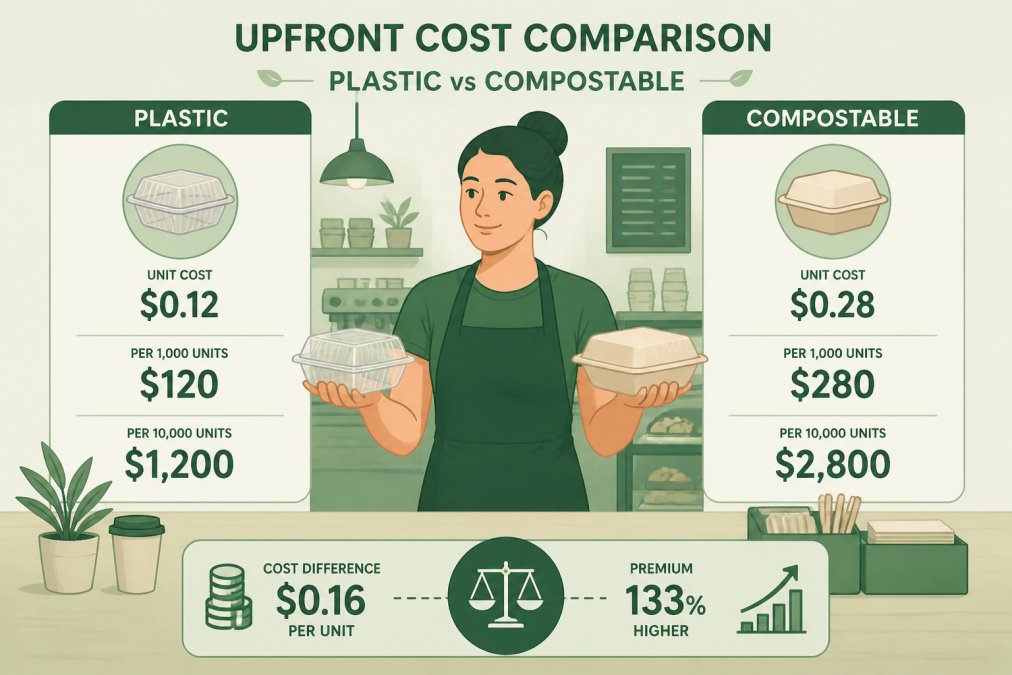
Consider unit economics at scale. A small cafe moving 200 cups daily spends roughly $18-22 per day on lids alone. Over a year, that's $6,570-8,030. The choice between plastic and compostable packaging compounds quickly when volume is consistent. Switching to certified compostable options from Biodegradable Packaging AU doesn't just change your packaging cost, it changes your entire waste management expense profile.
| Packaging Type | Unit Cost (per 100) | Annual Cost (200 cups/day) | Waste Management Fee | Total Year 1 Cost |
|---|---|---|---|---|
| Conventional Plastic | $142.40 | $7,120 | $800-1,200 | $7,920-8,320 |
| Plant Fibre Compostable | $59.80-86.05 | $2,990-4,303 | $0-200 | $2,990-4,503 |
The gap widens when you account for the fact that compostable packaging qualifies for landfill diversion incentives in many councils, and some waste management contracts offer reduced rates for certified compostable streams. Traditional plastic doesn't qualify for these benefits, it just sits in the cost column as a pure expense.
Hidden Costs You're Already Paying for Traditional Plastic
This is where most cafe owners miss the real picture. You're already paying for plastic in ways that don't show up on your packaging invoice.
Waste management contracts often tier pricing based on waste composition. High plastic content triggers higher disposal fees because councils charge more to process contaminated, mixed-material waste streams. You're paying a contamination premium without realising it. Conventional plastic lids end up in general waste, which costs more to process than certified organic waste streams. That's not a small difference, it's often 15-30% higher per tonne depending on your council's pricing structure.
Then there's the regulatory cost creeping in. Many councils are moving toward mandatory waste audits and composition reporting. If your waste stream contains too much non-compostable material, you face penalties or forced renegotiation of your waste contract at higher rates. The cost difference between plastic and compostable packaging starts looking much smaller when you factor in compliance costs you're already absorbing.
Storage and handling create hidden expenses too. Plastic packaging often requires more storage space because it doesn't compress as efficiently as paper-based compostable options. That's warehouse real estate you're paying rent on. It's not dramatic per item, but multiply it across months of inventory and it adds up.
Staff training and contamination management add another layer. Compostable packaging requires clear labelling and staff training to prevent contamination of composting streams. But here's the thing: that training investment pays dividends because it forces a conversation about waste management that most cafes never have. Once your team understands the waste stream, they often identify other efficiency opportunities, reducing overall waste volume, not just changing its composition.
AS 4736 Compostable Certification and Regulatory Compliance Costs
If you're serious about the cost difference between plastic and compostable packaging, you need to understand what "compostable" actually means legally in Australia. This is where greenwashing ends and real environmental accountability begins.
AS 4736 is the Australian Standard for biodegradable plastics suitable for home and industrial composting. It's not a marketing claim, it's a certification standard that carries legal weight. Products certified to AS 4736 must meet strict degradation timelines: complete breakdown within 180 days in industrial composting conditions, and within 12 months for home composting. This certification costs manufacturers money, and that cost is built into the price you pay.
But here's what makes it worth the investment: AS 4736 certification is your legal protection against greenwashing liability. If you're marketing your cafe as sustainable and your packaging isn't actually certified compostable, you're exposed to misleading conduct claims under Australian Consumer Law. The cost difference between plastic and compostable packaging suddenly includes the cost of legal compliance. Uncertified "compostable" packaging puts you at risk; certified packaging protects you.
Our plant fibre lids at Biodegradable Packaging AU are certified compostable with home composting certification underway, meeting the strictest standards in the market. That certification isn't free, it's reflected in the unit cost. But it's also your guarantee that the packaging will actually break down, not just sit in a landfill wearing a green label.
Councils are tightening their own compliance requirements too. Some now require proof of AS 4736 certification before accepting packaging in their composting streams. If your packaging doesn't carry the certification, it gets rejected and diverted to landfill anyway, defeating the entire purpose of switching. The cost difference between plastic and compostable packaging includes the cost of ensuring your choice actually works in your local waste system.
Benefits of Switching to Compostable Packaging for Your Cafe
The financial case for switching is stronger than most cafe owners think, but the non-financial benefits often matter more.
Brand differentiation is real. Customers notice. When they see certified compostable packaging, they make an assumption about your values, and that assumption translates into loyalty. It's not about charging a premium; it's about attracting customers who prefer to spend money with businesses that align with their values. The cost difference between plastic and compostable packaging becomes an investment in customer acquisition, not just a line item on your packaging budget.
Operational simplicity improves. Once you've switched to a single composting stream, waste management becomes predictable. No more sorting, no more contamination risk, no more surprise compliance issues. Your team can focus on making coffee instead of managing waste categories. That operational efficiency has real value, reduced staff training time, fewer mistakes, faster turnover.
Supply chain resilience matters more than most people realise. Plastic is a commodity tied to oil prices and global supply chain disruption. Compostable packaging made from plant-based materials (like the sugarcane pulp in our lids) is more insulated from petroleum price volatility. You're reducing your exposure to energy market shocks. That's a form of cost stability that traditional plastic can't offer.
The circular economy positioning is increasingly valuable for brand partnerships and corporate contracts. If you're a cafe looking to supply corporate offices or hospitality venues, compostable packaging becomes a selling point rather than a cost. Many larger organisations now require suppliers to meet sustainability standards. Switching to certified compostable options opens doors that plastic packaging keeps closed.
Local composting infrastructure access is improving rapidly. Compost Connect and similar services are expanding across metro areas, creating local end-of-life pathways that didn't exist five years ago. When you switch to compostable packaging, you're positioning your business to benefit from that infrastructure growth. Plastic packaging has no such pathway, it's a dead end.
How to Reduce Cafe Waste Management Costs Through Composting
The real cost difference between plastic and compostable packaging emerges when you implement composting properly. Half-measures won't save you money, full integration will.
Start by mapping your local composting infrastructure. Not all councils accept all types of compostable packaging, and some require specific certification levels. Contact your council's waste management team and ask exactly what they accept. This conversation takes 20 minutes and determines whether your packaging switch actually delivers value. If your council doesn't accept industrial compostable materials, you need to know that before you commit to purchasing.
Implement strict staff training on contamination prevention. This is non-negotiable. Compostable packaging only works if it actually reaches a composting facility. One contaminated batch, plastic mixed in with certified compostable material, can destroy an entire waste stream. Create a simple visual guide showing what goes into your compostable bin and what doesn't. Make it so obvious that new staff don't need to ask.
Audit your current waste stream to identify what's actually compostable. Many cafes assume only packaging matters, but food waste, napkins, and other materials often represent 40-60% of your waste volume. If you're only composting packaging while sending everything else to landfill, you're missing most of the benefit. A proper composting program addresses the entire waste stream.
Negotiate with your waste management provider about compostable-specific pricing. Many providers offer reduced rates for certified organic waste streams because they're cheaper to process. Once you've committed to composting, ask for a rate reduction. You've just reduced their processing cost, they should share that benefit.
Track your actual waste diversion rate. Measure how much of your total waste stream is being composted versus landfilled. This data drives continuous improvement and justifies the cost difference between plastic and compostable packaging to your stakeholders.
Long-Term Economic Benefits and Break-Even Timeline
The cost difference between plastic and compostable packaging inverts over time. Here's how.
Initial switching costs are real: new packaging inventory, staff retraining, potentially new composting bins or collection contracts. Budget for 2-4 weeks of disruption while systems settle. But after that stabilisation period, the economics flip.
Most cafes see payback within 12-18 months when they factor in:
- Reduced waste management fees (compostable waste costs less to process)
- Avoided contamination penalties (no more compliance surprises)
- Operational efficiency gains (simplified waste sorting)
- Potential waste reduction incentives from councils (some offer these)
The break-even point accelerates if you're operating at higher volume. A cafe serving 300+ cups daily sees payback in under 12 months. A smaller operation might take 18-24 months. But the payback is virtually guaranteed if you implement composting properly.
Long-term, the cost difference between plastic and compostable packaging becomes irrelevant because compostable actually costs less over a multi-year horizon. You're not just changing packaging, you're redesigning your waste economics. Biodegradable Packaging AU's commitment to facilitating access to local composting services means you're not navigating this alone. We help you identify the right infrastructure partners and ensure your packaging actually reaches the right end-of-life pathway.
The real value emerges in year two and beyond, when you're operating a fully optimised composting system. Your waste management costs stabilise at a lower baseline, staff efficiency improves, and your brand positioning strengthens. That's when you realise the cost difference between plastic and compostable packaging was an investment, not an expense.
Making the Switch: Practical Steps for Your Business
Switching to compostable packaging doesn't require a complete operational overhaul. It requires a structured approach.
Step 1: Audit your current packaging and waste stream. Spend a week tracking exactly what packaging you use, in what volumes, and at what cost. Identify which items are highest volume (lids, containers, cutlery). This data drives your switching priority. Don't try to change everything at once, start with your highest-volume items.
Step 2: Verify local composting acceptance. Contact your council and any private composting services in your area. Ask specifically what certifications they require and what materials they accept. Get this in writing. You're building the infrastructure map that determines whether your switch will actually work.
Step 3: Select certified compostable alternatives. Don't guess at certifications. Look for AS 4736 certification or equivalent international standards. Our plant fibre lids, like the 12oz-32oz White Plant Fibre BioBowl Lid at $64.05 per 100, offer certified compostability with no added PFAS, giving you peace of mind that you're not trading one environmental problem for another.

Step 4: Create staff training materials. Make contamination prevention visual and simple. Show what goes in the compostable bin. Show what doesn't. Make it impossible for staff to make mistakes. Include this in your onboarding process for new hires.
Step 5: Implement collection and logistics. Set up a dedicated compostable waste collection system separate from general waste. Ensure your composting service provider has a clear pickup schedule and accountability for what's collected. You need visibility into whether your waste is actually being composted.
Step 6: Monitor and adjust. Track your waste diversion rate monthly. Measure actual composting volumes versus landfill volumes. Identify contamination issues quickly and address them. This data drives continuous improvement and justifies the investment to your team.
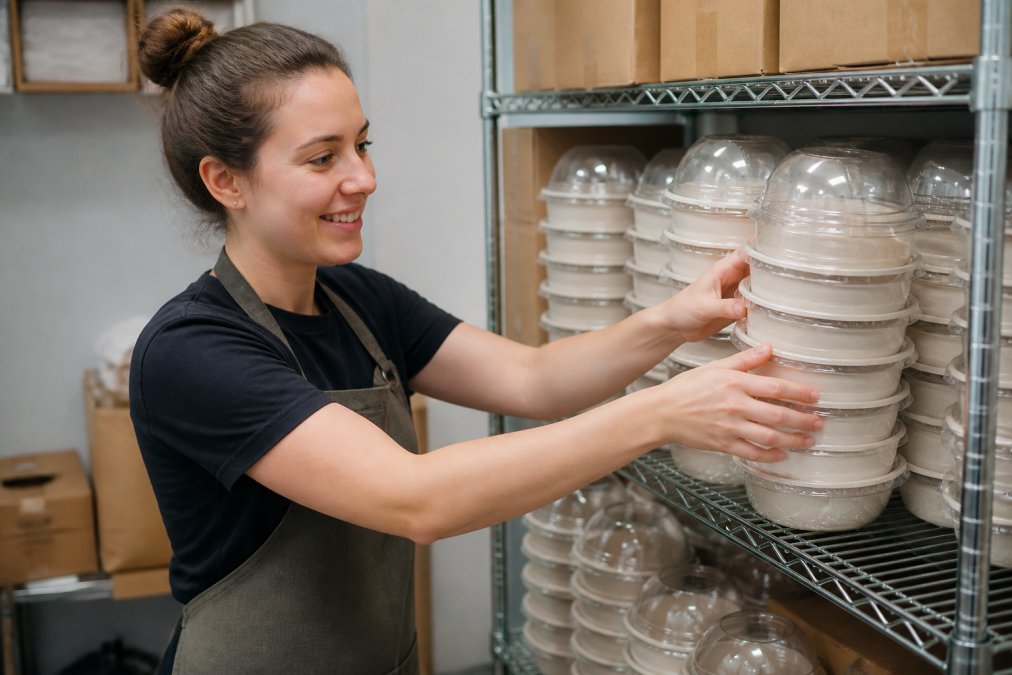
The transition typically takes 4-8 weeks from decision to full implementation. Most cafes report that the operational disruption is minimal, staff adapt quickly once the system is clear, and customers respond positively to the change.
The cost difference between plastic and compostable packaging is real at the unit level, but it's misleading as a decision-making metric. What matters is total cost of ownership: packaging cost plus waste management fees plus compliance risk plus brand value. When you calculate the full picture, compostable packaging is the more economical choice for most cafes operating in Australia.
Biodegradable Packaging AU helps you navigate this transition with certified compostable foodservice packaging designed for the Australian waste infrastructure, custom brand options to strengthen your market position, and free Melbourne metro delivery on orders over $200. The cost difference between plastic and compostable becomes an advantage when you have the right partner supporting your implementation.
Frequently Asked Questions
Q: Is compostable packaging actually more expensive than plastic in the long run?
A: Upfront costs for compostable packaging are typically higher than conventional plastic. However, the total cost of ownership differs significantly. When you factor in waste disposal fees, landfill levies, and regulatory compliance costs, compostable packaging can offer long-term economic benefits. Many cafes also see customer loyalty benefits and reduced operational waste handling, which further improves the economics.
Q: What does AS 4736 compostable certification mean for my cafe?
A: AS 4736 is the Australian standard that certifies packaging can break down safely in industrial composting facilities. For your cafe, this certification proves your packaging will actually decompose rather than persist in landfill. It also demonstrates compliance with emerging waste regulations and gives customers confidence in your sustainability claims, reducing greenwashing risk.
Q: How can I reduce cafe waste management costs by switching to compostable packaging?
A: Compostable packaging diverts food waste and packaging from landfill into composting streams, which typically cost less per tonne than general waste disposal. You also avoid future landfill levies and regulatory penalties. Additionally, certified compostable options like plant fibre lids can be a cost-effective choice, for example, our 12oz-32oz plant fibre lids start at $64.05 per unit, supporting your waste reduction goals.
Q: What are the main drawbacks of switching to compostable packaging?
A: The primary challenges are upfront cost, local composting infrastructure availability, and customer behaviour. Not all councils accept compostable packaging in standard green bins, so you need to verify your local waste management accepts industrial compostable material. Barrier strength (moisture and grease resistance) can be lower in some plant-based options, though certified compostable products meet food safety standards. Lead times for custom-branded packaging may also be longer than conventional plastic.
This article was written using GrandRanker