How to Reduce Cafe Waste Costs: 7 Proven Steps
September 2, 2026 · Editorial Team

Table of Contents
- How to Reduce Cafe Waste Costs: 7 Proven Steps
- Step 1: Conduct a Cafe Food Waste Audit Template to Identify Waste Streams
- Step 2: Implement Menu Engineering to Reduce Food Waste
- Step 3: Manage Inventory and Stock Rotation to Prevent Spoilage
- Step 4: Set Up Commercial Composting Services for Cafes
- Step 5: Train Staff and Drive Behavioural Change
- Step 6: Switch to Certified Compostable Packaging and Reduce Waste Disposal Costs
- Step 7: Understand Waste Management Regulations for Hospitality
- Frequently Asked Questions
Last Updated: September 2, 2026
How to Reduce Cafe Waste Costs: 7 Proven Steps
Reducing cafe waste costs directly improves your bottom line. Every kilogram of food that ends up in landfill represents money already spent on ingredients, labour, and disposal fees. Yet most cafe owners treat waste as inevitable rather than controllable.
At Biodegradable Packaging AU, we empower cafes across Australia to implement waste reduction strategies. The difference comes down to a few key systems: knowing where waste originates, redesigning menus to prevent spoilage, and switching to packaging that gets composted instead of landfilled.
This guide walks you through seven actionable steps to reduce cafe waste costs. Start with the steps that align with your biggest waste challenges, then build from there.
Step 1: Conduct a Cafe Food Waste Audit Template to Identify Waste Streams
The only way to know where your money is leaking is to measure it first. A waste audit reveals exactly which products, preparation methods, and times of day generate the most waste.
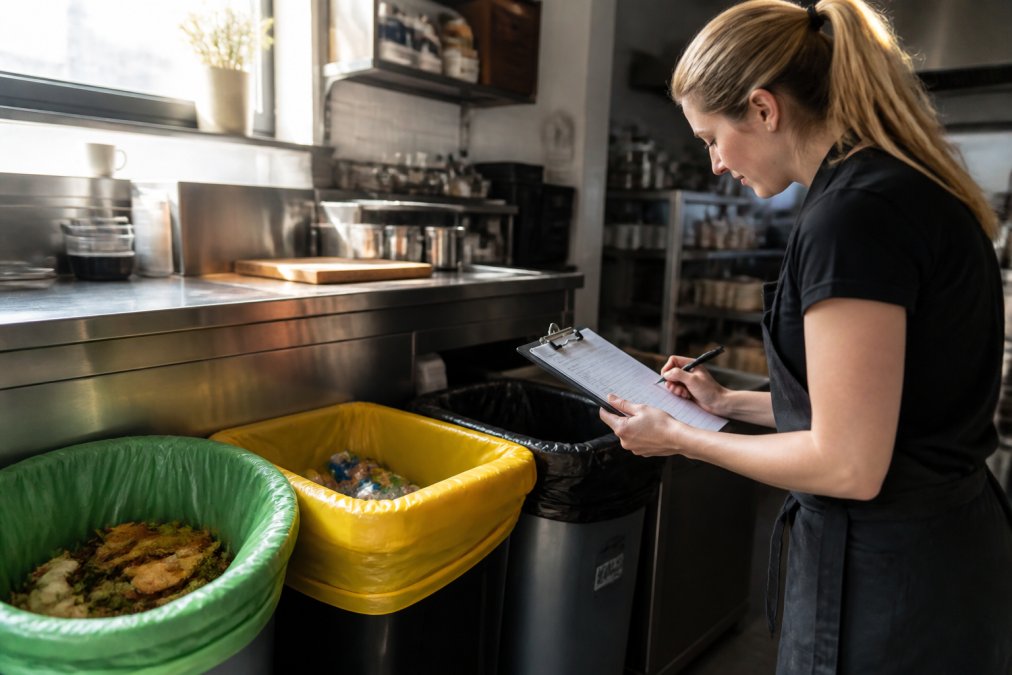
Start by categorising your waste into four streams: food waste (spoilage, plate waste, prep waste), packaging waste, beverage waste, and other. Assign one team member to track each category for one full week. Record the type of item, approximate weight or volume, and the reason it was discarded (expired, damaged, over-prepared, customer rejection, or trim waste).
Use a simple spreadsheet or app to log entries: item name, category, estimated quantity, waste reason, and date. After one week, calculate the financial impact. If you discarded five kilograms of pastries worth $35, that's $1,820 annually from one menu item (peer-reviewed research). Most cafes discover that 60-70% of their waste comes from just three to five products or processes.
Document your findings in a simple report: total waste by category, financial loss per category, and the top five waste drivers. This becomes your baseline and roadmap for improvement.
Step 2: Implement Menu Engineering to Reduce Food Waste
Menu engineering redesigns your menu to maximise sales of high-margin, low-waste items while eliminating products that generate consistent waste.
Review your waste audit data and identify items frequently discarded due to spoilage or low sales. A croissant that sells three per day but you prepare ten daily is a waste problem. Analyse your menu for complexity: every additional ingredient increases spoilage risk. Simplifying recipes doesn't reduce quality, it means being intentional about every component.
Consider seasonal adjustments. Align your menu with seasonal produce availability to reduce spoilage from out-of-season ingredients. Test portion sizes against actual customer consumption. Reducing portions by 10-15% often goes unnoticed while cutting waste significantly.
Introduce a "specials board" system where you feature items made from ingredients approaching their use-by date. This moves inventory and prevents waste.
Step 3: Manage Inventory and Stock Rotation to Prevent Spoilage
Spoilage is the silent killer of cafe margins. Inventory management and stock rotation are the foundations of waste prevention.
Implement the FIFO system (First In, First Out) for all perishable items. Older stock is always used before newer stock. Train staff to check dates daily and position older items at the front of shelves.
Establish par levels for each product, the minimum quantity you should have on hand. If your par level for milk is 20 litres and you're holding 35 litres, you're overstocked and increasing spoilage risk. Par levels should be based on sales velocity and shelf life.
Create a simple inventory log where staff record what they receive, use, and what expires. This reveals patterns within weeks and identifies suppliers delivering inconsistent quality.
Use technology where it makes sense. Simple barcode systems or inventory apps allow real-time tracking and automatic reorder alerts. For a small cafe, even a spreadsheet updated daily is better than relying on memory.
Review supplier relationships. Negotiate for fresher stock or more frequent smaller deliveries rather than bulk orders that sit in storage.
| Inventory Best Practice | Frequency | Expected Outcome |
|---|---|---|
| Daily FIFO check | Every morning | Prevents older stock expiry |
| Weekly par level review | Every Monday | Matches stock to demand |
| Monthly supplier audit | First Friday | Identifies quality/freshness issues |
| Quarterly menu adjustment | Quarterly | Removes consistent waste drivers |
Step 4: Set Up Commercial Composting Services for Cafes
Even with perfect waste reduction, organic waste will remain. Commercial composting diverts that waste from landfill while reducing disposal costs.
Research composting providers in your area. Many Australian councils partner with commercial composting facilities that accept food waste and soiled compostable packaging. Compare costs, collection frequency, and certifications. Look for facilities certified by Australian Compost Standard (AS 4454), which ensures waste becomes genuine compost.
Set up separate bins for compostable organic waste. Train staff on what goes into each bin: food scraps, coffee grounds, soiled paper napkins, and compostable packaging go into the compost bin; plastic, metal, and non-compostable packaging go elsewhere. Clear signage prevents contamination.
Establish a collection schedule that prevents overflow. Most cafes generate enough organic waste for weekly collection; busy venues may need twice-weekly pickups.
Track the weight of waste diverted to composting. This demonstrates your sustainability commitment and helps measure whether waste reduction efforts are working.
Step 5: Train Staff and Drive Behavioural Change
Systems only work when people follow them. Staff training is the most underinvested waste reduction tool, yet it often delivers the fastest results.
Start with a training session explaining waste audit findings and financial impact. Show staff exactly how much money was lost to waste and where it came from. Make it concrete: "We threw away $340 worth of pastries last month because we were preparing too many."
Teach specific procedures: FIFO rotation, correct bin usage, portion sizing, and when to flag approaching expiry dates. Create a one-page reference guide posted in the prep area with visual cues.
Introduce a simple incentive system. If your cafe reduces waste by 20% in a month, give staff a bonus or recognition. This transforms waste reduction into team success.
Create a weekly or monthly waste review meeting where you share data with staff. Show progress, celebrate wins, and discuss obstacles. If staff report that a menu item is difficult to portion correctly, act on that feedback.
Step 6: Switch to Certified Compostable Packaging and Reduce Waste Disposal Costs
Packaging waste is often overlooked as a major cost driver. Many cafes use conventional plastic or mixed-material packaging that cannot be recycled or composted, forcing them to pay disposal fees.
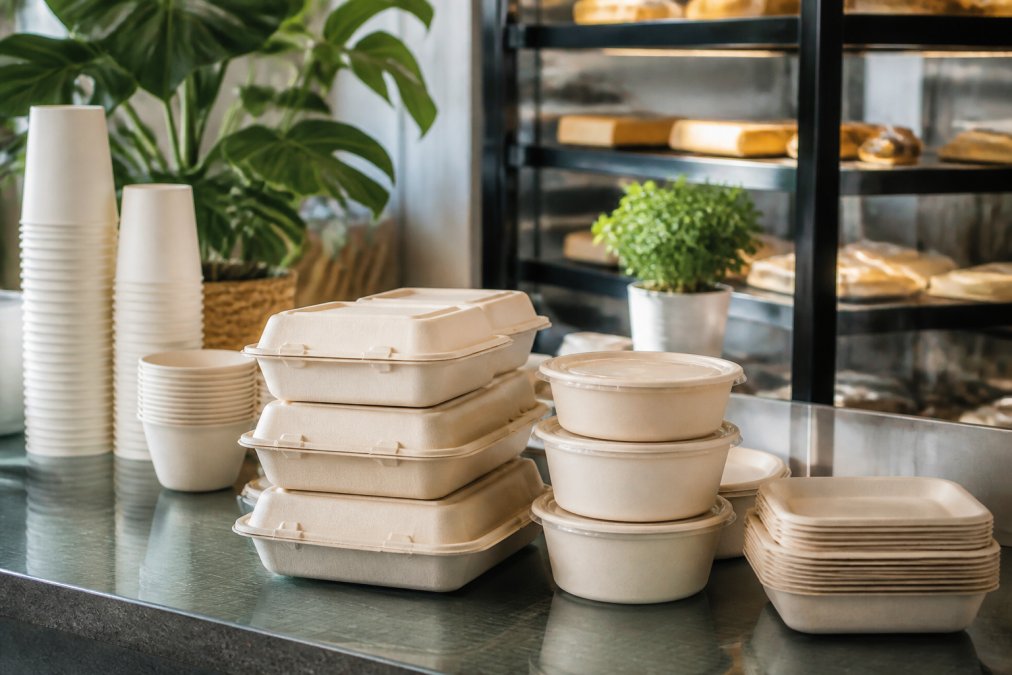
Switching to certified compostable packaging reduces disposal costs (compostable waste often has lower tipping fees), supports your composting program, and aligns your brand with customer values. Research shows customers increasingly prefer businesses using sustainable packaging.
Biodegradable Packaging AU supplies certified compostable takeaway containers, cups, and packaging made from plants rather than petroleum-based plastics. These materials break down in commercial composting facilities, becoming compost rather than landfill. The company offers free Melbourne metro delivery on orders over $200.
When evaluating compostable packaging, verify certifications. Look for AS 5810 (compostable plastics) and AS 4454 (compost quality) standards, which confirm packaging will break down in Australian composting facilities.
Calculate the true cost comparison. Compostable packaging may have slightly higher per-unit cost, but lower disposal fees for compostable waste streams often eliminate the net cost difference. A napkin dispenser system like the Single Saver BioDispenser reduces napkin usage by promoting controlled dispensing, cutting both material costs and waste volume. Individual units start at $41.65.

Communicate the switch to customers. Many will appreciate the sustainability effort and may even pay a small premium for takeaway items.
Step 7: Understand Waste Management Regulations for Hospitality
Waste management for hospitality businesses is governed by state-based environmental protection legislation and council-specific policies. Understanding your obligations ensures compliance and reveals cost-saving opportunities.
In most Australian states, businesses generating significant food waste may be required to have a waste management plan or report waste volumes. Check with your state's Environmental Protection Authority for specific thresholds and reporting requirements. Some councils offer grants or incentives for businesses implementing waste reduction programs.
Food waste disposal is regulated differently from general waste. Many councils require or incentivise separation of food waste from general waste, which often results in lower tipping fees for composted material.
Packaging regulations are evolving. As of 2026, single-use plastic restrictions are tightening in many Australian jurisdictions. Switching to certified compostable alternatives now positions your cafe ahead of regulatory changes and avoids supply disruption.
Some states offer tax deductions or rebates for businesses investing in waste reduction infrastructure or sustainable packaging. Check with your accountant or local business development service.
Document your waste reduction efforts. Many councils track sustainability metrics and may feature compliant businesses in promotional materials or give priority access to council-run composting programs.
Reducing cafe waste costs requires treating waste as a controllable business expense rather than inevitable. The steps outlined here, auditing, menu engineering, inventory management, composting, staff training, sustainable packaging, and regulatory compliance, work together to create a waste reduction system.
Start with your biggest waste driver, implement one or two solutions, measure results, then build from there. Most cafes see meaningful cost savings within 60 days of consistent implementation. The financial return is immediate, and the brand reputation benefit compounds over time. Biodegradable Packaging AU's certified compostable packaging and custom branding options help you turn waste reduction into a visible brand differentiator while supporting the circular economy.
Frequently Asked Questions
How much can I actually save by reducing cafe food waste?
Reducing food waste directly cuts disposal fees, inventory costs, and spoilage losses. Cafes that conduct a waste audit and implement portion control can see waste disposal costs drop. Additional savings come from lower food purchasing needs and reduced labour spent managing excess stock. The exact figure depends on your current waste volume and disposal fees, which is why a baseline audit is essential.
What should I include in a cafe food waste audit template?
A cafe food waste audit template should track: daily waste volume by category (food scraps, packaging, unsold items), disposal method and costs, peak waste times, and which menu items generate the most waste. Record data for at least two weeks to identify patterns. Include staff observations on common causes (overproduction, spoilage, customer rejection). This baseline data reveals your biggest cost drivers and guides which reduction strategies will have the most impact.
How do I know if commercial composting services for cafes are available near me?
Contact your local council's waste management department to ask about certified composting facilities accepting organic waste from food businesses. Many councils provide lists of approved operators. Compost Connect is a resource that helps cafes connect with local composting services. Verify that any service is certified to handle food waste and can provide documentation that your organic waste actually reaches composting, not landfill. Some services offer collection, which reduces your handling burden.
What waste management regulations for hospitality do I need to follow?
Hospitality businesses must comply with state-based waste and environmental protection regulations. Most states require food businesses to separate organic waste from general waste if a composting service is available. Check your local council's planning and environmental guidelines for mandatory waste separation. From 2026, many councils are strengthening packaging regulations to reduce single-use plastics. Switching to certified compostable packaging helps you stay ahead of compliance while reducing disposal costs.
This article was written using GrandRanker