How to Avoid Greenwashing in Packaging: 2026 Guide
September 6, 2026 · Editorial Team

Table of Contents
- Why Greenwashing in Packaging Is a Growing Risk
- What Counts as Misleading Environmental Marketing
- Step 1: Check Your Claims Against ACCC Environmental Claims Guidance
- Step 2: Verify AS 4736 and AS 5810 Certification Before You Print
- Step 3: Audit Your Supply Chain for Material Transparency
- Step 4: Build an Internal Claims Review Checklist
- Step 5: Design Packaging That Matches Local Waste Infrastructure
- Common Greenwashing Traps to Avoid
- Frequently Asked Questions
Last Updated: September 6, 2026
Why Greenwashing in Packaging Is a Growing Risk
Greenwashing in packaging is the practice of making unsubstantiated or misleading environmental claims about a product's packaging to appear more eco-friendly than it truly is. Regulators are paying closer attention, and the hospitality sector, which relies heavily on single-use foodservice items, is squarely in the spotlight.
Operators sometimes print "100% recyclable" on a cup that their local council won't process, or label a lid "compostable" without any certification. These mistakes damage brand integrity and invite regulatory scrutiny. This guide walks through five practical steps to ensure your packaging marketing is honest, verifiable, and defensible.
What Counts as Misleading Environmental Marketing
Misleading environmental marketing covers any claim that is vague, unproven, or likely to deceive a reasonable consumer about a product's environmental impact. The most common forms include using broad terms like "green" or "eco-friendly" without specifics, highlighting a single positive attribute while ignoring significant harms, and relying on unverified certifications or imagery that suggests a recyclability the packaging does not possess.
The core problem is often a lack of substantiation. A claim might be technically true in a narrow sense but presented in a way that implies a much broader benefit. For example, stating a container is "biodegradable" when it only breaks down under specific industrial conditions, which the average consumer cannot access, is a classic misstep.
Step 1: Check Your Claims Against ACCC Environmental Claims Guidance
The Australian Competition and Consumer Commission (ACCC) has published specific guidance on making environmental claims, and this is your first point of reference. The guidance outlines eight principles for credible claims, including being accurate, having a clear basis for comparison, and not omitting relevant information (accc.gov.au).
A practical way to apply this is to audit every descriptive word you use. Replace ambiguous terms with precise, qualified language. Instead of "better for the planet," state the specific benefit, such as "made from 80% post-consumer recycled content." The ACCC guidance on environmental claims is clear that businesses must be able to substantiate any claim they make, so build a file of evidence for every assertion, from material sourcing to end-of-life processing.
Step 2: Verify AS 4736 and AS 5810 Certification Before You Print
Before you print "compostable" on any packaging, you must verify that the product holds the relevant Australian standard certification. This is not a marketing choice; it is a legal and factual claim about the material's behaviour under specific conditions. The two standards that govern compostable packaging in Australia are AS 4736 (industrial compostability) and AS 5810 (home compostability).
AS 4736 certification confirms that a product will disintegrate and biodegrade within a commercial composting facility, typically operating at temperatures above 55°C for extended periods (standards.org.au). AS 5810 is a more stringent standard, requiring the material to break down in a home compost bin, which operates at lower and more variable temperatures. A product certified to AS 5810 will generally also meet AS 4736, but the reverse is not true.
Certification is not a self-assessment. It is granted by independent third-party laboratories that test samples against the criteria in the standard, including heavy metal content, disintegration percentage, and ecotoxicity. In Australia, the Australasian Bioplastics Association (ABA) runs a certification scheme that licenses the use of the seedling logo alongside the relevant standard number. When you see the seedling logo on a cup or a lid, it should be accompanied by a reference to either AS 4736 or AS 5810. If the standard number is absent, the claim is unverifiable.
For a food business, the operational distinction between the two standards is critical because it dictates what you must tell your customers. If your packaging is only certified to AS 4736, you cannot advise customers to put it in their home compost. If your business operates in an area without access to industrial composting facilities, then AS 5810 certified packaging is the only honest choice for a "compostable" label.
A practical verification step is to request the certificate of conformity from your supplier, not just the logo printed on the box. The certificate will name the specific product line, the standard it meets, and the date of testing. Keep this document on file as part of your substantiation evidence. If a supplier cannot provide a current certificate, treat their compostability claim as unsubstantiated and do not pass it on to your customers.
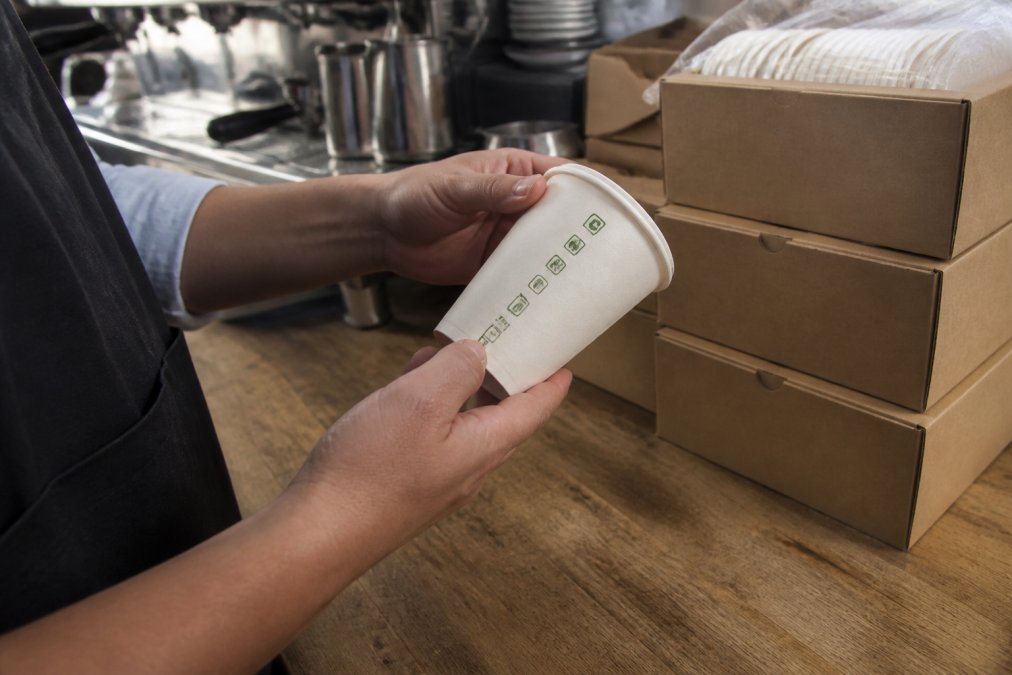
The distinction also matters for your waste management claims. If you tell customers an item is "compostable" and they place it in a kerbside green bin that is processed at an industrial facility, AS 4736 certification is sufficient. However, if you are a stallholder at a weekend market with no commercial composting access, you must either provide a take-back scheme or use AS 5810 certified packaging to ensure the item can be composted at home.
Step 3: Audit Your Supply Chain for Material Transparency
Material transparency means knowing exactly what your packaging is made from and being able to trace that material back to its source. This step moves beyond the finished product and examines the claims made by your suppliers. You need documented evidence of material sourcing, such as FSC certification for paper products or proof that a bioplastic is derived from plants rather than fossil fuels.
The challenge here is that supply chain accountability often stops at the first tier. You buy from a distributor who buys from a manufacturer who sources raw materials from a processor. To avoid greenwashing, you need to push for documentation at each stage. Request technical data sheets and certificates for every material component, including linings and coatings, and keep these on file. If a supplier cannot provide certification, that is a red flag that their claims may not hold up to scrutiny.
Step 4: Build an Internal Claims Review Checklist
An internal audit checklist for marketing teams is the most effective tool for preventing accidental greenwashing before it reaches the customer. This checklist should be a mandatory step in the approval workflow for any new packaging, label, or marketing asset. It standardises the review process and ensures that claims are checked against evidence rather than approved based on enthusiasm.
The checklist should force reviewers to answer specific questions. Does this claim use vague language like "eco-friendly" that needs to be more specific? Is the certification name and standard number printed on the packaging? Have we stated whether the item is home or industrially compostable? Does our marketing imagery imply the packaging can be recycled in kerbside bins when it cannot?
Step 5: Design Packaging That Matches Local Waste Infrastructure
The reality of recycling and composting is local, and packaging design must respect the infrastructure where the product is sold and consumed. A "recyclable" claim is only meaningful if the local council or a nearby facility actually accepts and processes that material. Similarly, a "compostable" claim is only useful to a customer if they have a way to compost the item, either at home or through a commercial service.
Consider the practical differences across Australian jurisdictions. A plastic container marked with the chasing arrows symbol may be technically recyclable, but if the local materials recovery facility (MRF) in your operating area does not have optical sorters for that specific polymer, the item will be rejected and sent to landfill. For example, some regional councils in Queensland and Western Australia do not accept certain coloured plastics or small-format items like bottle lids, even if the material itself is technically recyclable.
Compostable packaging faces a similar infrastructure challenge. The Australasian Bioplastics Association maintains a map of commercial composting facilities that accept certified compostable packaging, but the coverage is not uniform. A cafe in inner-city Sydney may have access to a commercial composter through a service like Compost Connect, but a regional cafe in rural Victoria may have no such service within a viable transport distance.
The solution is to design your packaging system around the waste services that actually exist in your operating areas. This requires a three-step verification process. First, identify the council areas where you operate. Second, contact the local council's waste management team or check their website to confirm which packaging materials they accept in kerbside recycling and green bins. Third, if you are using compostable packaging, confirm that a commercial composting facility services that region and that your packaging is on their accepted list.
For mobile businesses operating across multiple suburbs or states, this creates a genuine design tension. A packaging choice that works in one area may fail in another. The safest approach is to design for the most restrictive infrastructure in your operating area. If you serve at a farmers market in a region without commercial composting, use AS 5810 home-compostable packaging rather than AS 4736 industrial-only items.
This is where the intersection of packaging design and regional waste management infrastructure becomes crucial. Biodegradable Packaging AU helps operators navigate this by focusing on certified compostable packaging and supporting connections to local composting services like Compost Connect, which helps ensure certified packaging actually reaches a composting facility rather than landfill. The key is to treat waste infrastructure as a design constraint, not an afterthought, and to document your verification process for each operating area as part of your greenwashing risk assessment.
Common Greenwashing Traps to Avoid
Several recurring traps catch even well-intentioned businesses. The most common is relying on vague terms without substantiation, such as "eco-friendly" or "sustainable," which say nothing concrete. Another is the use of misleading imagery, like a green leaf logo on a product that is not certified, which creates a false impression of environmental virtue.
A further trap is making a comparative claim without a clear basis. Stating your packaging is "better" than a previous version is meaningless unless you specify the metric, such as a reduction in carbon footprint or an increase in post-consumer recycled content. Finally, avoid the "single-attribute" claim, where one positive feature, such as being made from plants, overshadows the fact that the item is not recyclable or compostable in the local area.
This table summarises the core checks from each step to keep your claims defensible:
| Step | Key Action | Common Pitfall | Verification Method |
|---|---|---|---|
| 1. ACCC Guidance | Align claims with principles | Using vague, unqualified terms | Review copy against ACCC's 8 principles |
| 2. Certification | Confirm AS 4736 or AS 5810 | Assuming industrial = home compostable | Check for certification logo and standard number |
| 3. Supply Chain | Trace material sourcing | Accepting supplier claims without proof | Request FSC certificates and technical data sheets |
| 4. Internal Review | Audit every marketing asset | Approving claims without evidence | Run a mandatory pre-print checklist |
| 5. Local Waste | Match design to infrastructure | Claiming recyclability without local access | Verify acceptance with local council or composting service |
Avoiding greenwashing is not a single task but a continuous discipline that touches packaging design, supplier relationships, and marketing communications. The challenge is maintaining this rigour across every product line and every new campaign as your menu evolves. Biodegradable Packaging AU supports Australian food businesses in this effort with certified compostable foodservice packaging and custom brand options, backed by a commitment to material transparency and diverting waste from landfill.
Frequently Asked Questions
What are the ACCC guidelines for environmental claims in packaging?
The ACCC environmental claims guidance explains how the Australian Consumer Law applies to eco-friendly marketing. Claims must be accurate, have scientific evidence, and not exaggerate benefits. Terms like 'green' or 'eco-friendly' need clear qualification. The guidance also warns against using certification logos without permission and making broad claims about the whole product when only the packaging qualifies. Following this guidance is your first line of defence against misleading environmental marketing.
What is the difference between 'biodegradable' and 'compostable' in packaging?
Biodegradable means a material will break down over an unspecified time, which tells you little about real-world disposal. Compostable is a stricter standard. In Australia, AS 4736 certifies industrial compostability and AS 5810 certifies home compostability. These standards require breakdown within set timeframes and non-toxic residues. If your packaging carries a compostable claim, verify it holds one of these certifications rather than relying on the word 'biodegradable' alone.
How can businesses ensure their packaging claims are not misleading?
Start by documenting evidence for every environmental claim you make. Check your wording against the ACCC environmental claims guidance and confirm any certifications like AS 4736 or AS 5810 are current and cover the specific product. Review whether your packaging actually reaches the composting or recycling stream your label promises. Set up an internal checklist so marketing, procurement and design teams all verify claims before anything goes to print.