Compostable Packaging for Food Trucks: 7 Options
August 17, 2026 · Grandranker

Table of Contents
- Why Compostable Packaging Matters for Food Trucks
- Quick Comparison Table
- 1. BioCane Clamshells: Heat-Resistant Bagasse Containers
- 2. BioBoard Noodle Boxes: AS 4736 Certified Compostable Containers
- 3. BioCups: Home Compostable Food Containers for Beverages
- Reducing Food Truck Waste Costs with Compostable Solutions
- How to Verify Certification and Avoid Greenwashing
- Conclusion
Last Updated: August 17, 2026
Why Compostable Packaging Matters for Food Trucks
Food trucks operate on thin margins, and packaging decisions ripple through your bottom line and brand reputation. Compostable packaging for food trucks is becoming a competitive necessity. Three forces drive this shift: regulatory momentum toward waste diversion targets, customer expectations, especially younger demographics, and operational reality: compostable packaging can reduce total waste management costs when you factor in landfill levies and disposal fees.
The real tension isn't whether to switch, it's whether your compostable solution will actually get composted or end up in landfill. That's where certification matters. Without it, you're paying more for packaging that delivers zero environmental benefit.
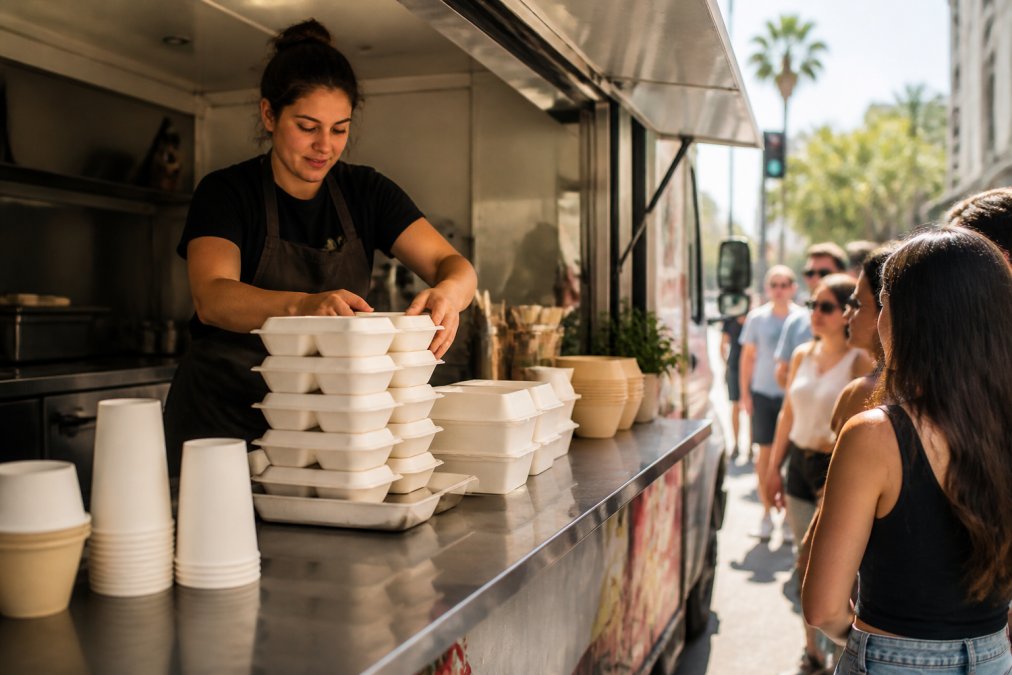
At Biodegradable Packaging AU, we work with mobile food operators who've made this transition successfully. The businesses that succeed verify their supply chain, understand local composting infrastructure, and pick packaging that performs under real mobile food conditions.
Below, we'll walk through seven practical compostable packaging options for food trucks, how to spot genuine certification versus marketing hype, and what it costs to switch without breaking your business model.
Quick Comparison Table
| Product Type | Starting Price | Best For | Key Certification |
|---|---|---|---|
| BioCane Clamshells | $88.65 per box | Hot meals, compartmentalised serving | Industrial compostable |
| BioBoard Noodle Boxes | $156.45 per box | Asian cuisine, wet foods | AS 4736 certified |
| BioCups (home compostable) | $199.95 per box | Beverages, coffee | AS 5810 certified |
| Wooden cutlery | $69.35 per box | Forks, spoons, sustainable alt | FSC certified |
| Plant-based cutlery | $54.40 per set | Knife, fork, napkin combos | Industrially compostable |
| Bioplastic carry bags | $158.15 per box | Cold items only, takeaway | Plant-based PLA |
1. BioCane Clamshells: Heat-Resistant Bagasse Containers
BioCane clamshells are made from sugarcane pulp, a by-product of sugar refining that would otherwise be waste. For food trucks serving hot meals, these containers deliver structural integrity under temperature stress and moisture resistance that holds up.

The 23x23x8cm three-compartment white plant fibre clamshell costs $88.65 per box and handles real mobile food conditions. Hot curry won't warp the container. Grease from fried foods won't seep through. The compartments keep different menu items separated.
What makes bagasse containers stand out is their heat tolerance. Many compostable alternatives soften above 60°C. BioCane handles sustained heat without degradation. Bagasse is rapidly renewable and breaks down in industrial composting within 90-180 days, with significantly lower carbon footprint than virgin plastic.
One limitation: BioCane requires industrial composting. Home composting won't break them down effectively. This is only a problem if your local council lacks industrial composting infrastructure.
For food trucks serving hot meals, BioCane clamshells are the practical choice.
2. BioBoard Noodle Boxes: AS 4736 Certified Compostable Containers
BioBoard noodle boxes are engineered for wet, high-temperature foods like Asian cuisines and risottos. The 780ml box costs $156.45 per box and carries AS 4736 certification, the Australian standard for industrial compostability verified by independent testing.

BioBoard uses FSC Mix certified paperboard lined with Ingeo, a plant-based bioplastic. The waterproof lining handles moisture while remaining compostable. The kraft-look printing signals sustainability without appearing cheap.
Heat performance is excellent. These boxes maintain structural integrity at 70-85°C, the temperatures food trucks operate at. For premium meal operations, the investment pays back in customer perception.
AS 4736 certification is the key differentiator. It's measurable verification, not marketing.
3. BioCups: Home Compostable Food Containers for Beverages
The 295ml white double-wall BioCup costs $199.95 per box and carries AS 5810 certification, the Australian standard for home compostability. Home compostable means the cup breaks down in a backyard compost bin within 12 months, removing infrastructure dependency.
This matters for beverages because customers take cups away. A home compostable cup means they can dispose of it responsibly without finding a commercial facility. The double-wall construction provides insulation for hot beverages. The aqueous water-based coating is compostable, unlike traditional plastic cup linings.
The cost is higher than traditional paper cups, but for beverage-focused food trucks, the premium is justified. You're not asking customers to figure out disposal; you're giving them a cup they can compost at home.
These cups are designed for beverages, not hot food.
Reducing Food Truck Waste Costs with Compostable Solutions
The financial case for compostable packaging hinges on understanding waste management structure. Traditional plastic costs little upfront but creates disposal costs downstream through landfill levies and waste contractor fees. Some councils offer discounts for waste diverted to composting facilities, making compostable packaging cost-neutral or cheaper overall.
For a food truck generating 50kg of packaging waste weekly, the difference between $0.15/kg and $0.25/kg disposal rates is $500 annually. If compostable packaging costs 20% more upfront but saves $600 annually in disposal fees, you break even in year one.
Before switching, contact your local council's waste team and ask: Do they accept industrially compostable materials? Do they offer waste diversion incentives? What's the cost difference between general waste and composting-directed waste?
Biodegradable Packaging AU offers free Melbourne metro delivery on orders over $200. For operators outside Melbourne, factor shipping costs into your comparison.
How to Verify Certification and Avoid Greenwashing
"Compostable" has become a marketing term. Genuine certification is the only way to verify you're not paying premium prices for packaging that won't actually break down.
Two Australian standards matter: AS 4736 (industrial compostability) and AS 5810 (home compostability). Both are recognised by the Australian Composting Standards Committee. If packaging doesn't reference one of these standards, it's unverified marketing language.
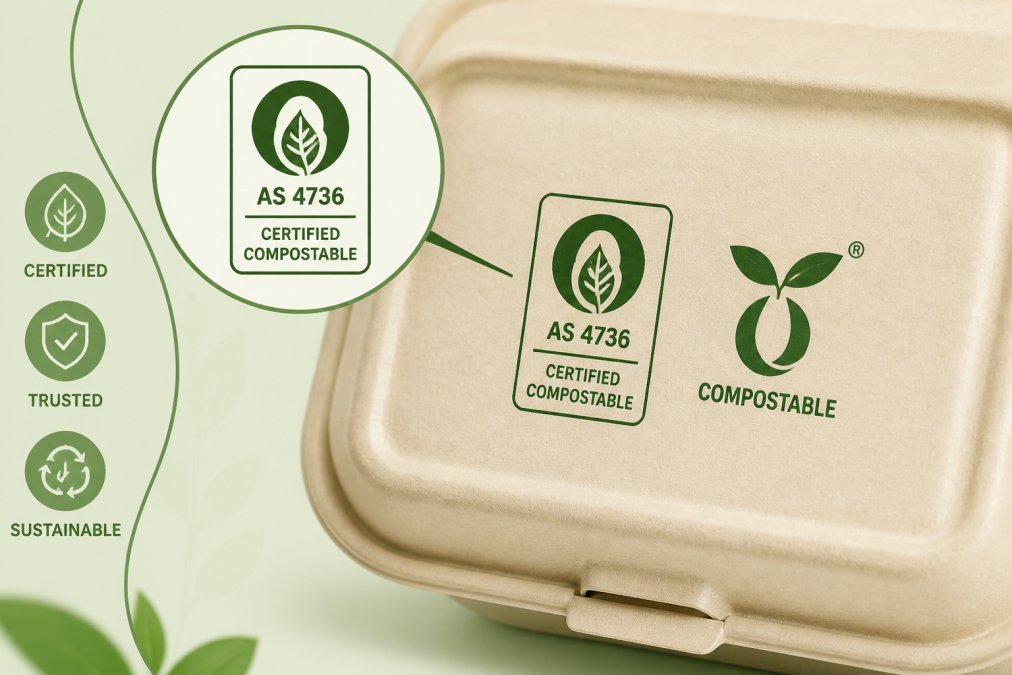
Look for the certification mark on the packaging itself. If you can't find it, ask your supplier for the certification document. Any legitimate supplier will provide proof. If they won't, the "compostable" claim is unverified.
Greenwashing typically takes two forms: vague language like "eco-friendly" without specifying which standard, or wrong certification for the use case, home compostable packaging sold to a business with only industrial composting access.
Ask your supplier: Which Australian standard does this meet (AS 4736 or AS 5810)? Can you provide the certification document? What's the breakdown timeline? What's the minimum temperature required?
Biodegradable Packaging AU's products carry explicit certification. BioBoard noodle boxes are AS 4736 certified. BioCups are AS 5810 certified. This is measurable verification, not marketing.
Supporting Sustainable Supply Chain Operations
Mobile food businesses need reliable, affordable, sustainable stock while managing limited storage space. Biodegradable Packaging AU offers free Melbourne metro delivery on orders over $200, reducing friction when switching to compostable packaging. For operators outside Melbourne, factor shipping costs into your comparison.
Compostable packaging made from plant-based materials requires more care than inert plastic. The 8L bioplastic carry bags are cold-use only and should be stored below 35°C. Plan your storage accordingly.
Waste management partnerships are equally important. Before committing to compostable packaging, confirm you have a disposal pathway. Contact your local council and understand the logistics of getting packaging to the facility. Some councils collect compostable waste from businesses; others require you to arrange transport.
The circular economy only works if packaging actually completes the cycle.
Conclusion
Compostable packaging for food trucks is becoming the standard for operators who want to stay competitive and compliant with emerging waste regulations. The decision is about operational reality: certification matters, cost savings are real when you do the maths, and greenwashing is a liability.
Biodegradable Packaging AU's range of certified compostable containers, from BioCane clamshells for hot meals to AS 5810-certified BioCups for beverages, performs under real mobile food conditions. With custom branding and free Melbourne metro delivery on orders over $200, you can transition to sustainable packaging without operational friction. Get started with Biodegradable Packaging AU and turn your packaging into a competitive advantage that actually gets composted.
Frequently Asked Questions
What makes compostable packaging different from biodegradable packaging?
Compostable packaging breaks down into natural materials within a specific timeframe in a composting environment, meeting standards like AS 4736 (industrial) or AS 5810 (home). Biodegradable packaging simply breaks down over time but may not fully decompose or meet certification standards. For food trucks, certified compostable packaging ensures your waste actually diverts from landfill when processed at a composting facility, reducing methane emissions and supporting the circular economy.
How do I know if compostable packaging is actually certified and not greenwashing?
Look for certification logos from recognised standards bodies. In Australia, AS 4736 certifies industrial compostable packaging, while AS 5810 certifies home compostable products. Check the product description or packaging label for these marks. Ask your supplier for a certificate of compliance. Greenwashing uses vague terms like 'eco-friendly' without third-party verification. Certified compostable packaging from suppliers like Biodegradable Packaging AU includes the certification number and standard, giving you proof the product meets strict environmental requirements.
Will my local council actually accept compostable packaging in their composting program?
This varies by council and composting facility. Some facilities accept AS 4736 certified industrial compostable items; others don't accept any compostable packaging. Contact your local council's waste management team or your nearest composting facility directly to confirm what they accept. Many councils provide lists of accepted materials online. Home compostable packaging (AS 5810) can go in home compost bins if you have one, but won't be accepted in most council green bins. Waste management partnerships with certified facilities can guarantee your packaging gets processed correctly.
How can switching to compostable packaging reduce my food truck waste costs?
Compostable packaging reduces disposal costs by diverting waste from landfill to composting facilities, which often charge lower tipping fees than general waste. You also benefit from improved brand perception, which can increase customer loyalty and sales. Custom-branded compostable packaging strengthens your brand without the cost premium of traditional branded plastics. Bulk ordering from suppliers offering free delivery (over $200) reduces freight costs. Over time, the combination of lower waste fees, reduced landfill levies, and enhanced customer retention offsets the slightly higher per-unit cost of certified compostable materials.
Are compostable containers durable enough for hot foods and liquids?
Yes. BioCane clamshells made from sugarcane pulp and BioBoard noodle boxes handle hot foods reliably. BioCups with water-based coatings are certified for hot beverages. However, PLA-based items (like some cutlery) soften above 35°C and are best for cold foods and drinks. Always check product specifications for temperature limits. For mobile food trucks, bagasse and paperboard options provide the durability you need for immediate service, while avoiding the brittleness of some early compostable plastics. Heat resistance and durability are key selling points of certified options.
This article was written using GrandRanker