Compostable Packaging for Cafes: A 2026 Guide
August 31, 2026 · Editorial Team

Table of Contents
- Why Compostable Packaging Matters for Cafes Now
- Understanding Certified Compostable Takeaway Containers
- Plastic Ban Compliance for Hospitality Businesses
- Choosing the Right Packaging for Your Menu
- Commercial Composting Services for Cafes
- Verifying Genuine Certifications and Avoiding Greenwashing
- Cost-Benefit Analysis: What Sustainable Packaging Actually Costs
- Conclusion
- Frequently Asked Questions
Why Compostable Packaging Matters for Cafes Now
The 2026 plastic ban is happening now. Cafes without compliant packaging face fines, supply chain disruptions, and customer backlash. The real opportunity isn't just compliance, it's repositioning your business as one that genuinely supports waste diversion and the circular economy.
Compostable packaging has shifted from a marketing angle to an operational necessity. Regulations are tightening, councils are rolling out organic waste collection, and customers expect sustainability claims backed by real action. Most cafe owners don't understand certified compostable materials, greenwashing, or what actually happens to their packaging after it leaves the counter.
At Biodegradable Packaging AU, we've spent years helping hospitality businesses navigate this transition. The businesses that succeed understand that compostable packaging is a competitive advantage. Your packaging tells a story about your brand values. When it actually decomposes in a local composting facility instead of sitting in landfill for decades, that story becomes real.
This guide covers the standards that matter, materials that perform, how to verify certifications, and the real cost-benefit picture. By the end, you'll know which packaging suits your menu, how to source it, and how to ensure it actually gets composted.
Understanding Certified Compostable Takeaway Containers
Certified compostable takeaway containers aren't just "biodegradable", that word means almost nothing. Compostable means they break down into organic matter in specific conditions within a defined timeframe, leaving no toxic residue. The key word is certified.
Two Australian standards govern this space, and they're not interchangeable.
AS5810 Home Compostable vs AS4736 Industrial Compostable
Home compostable (AS5810) breaks down in backyard compost bins within 12 months at temperatures between 20-30°C. This signals that customers can safely compost the packaging at home.
Industrial compostable (AS4736) requires higher temperatures (55-60°C) and shorter timeframes (90-180 days) in commercial composting facilities. Most cafe packaging falls into this category because home composting doesn't reach the required temperatures.
The practical difference: AS5810 is a stronger marketing claim for environmentally conscious customers. AS4736 is sufficient and more cost-effective if your local council has an industrial composting facility that accepts food-soiled packaging. Many cafe owners stumble here, they assume their council accepts compostable packaging without verifying.
Biodegradable Packaging AU's BioBoard Lunch Boxes are certified to AS4736, designed for the commercial composting infrastructure now operating across most Australian councils. The FSC-certified paperboard lined with plant-based Ingeo bioplastic breaks down reliably in industrial settings.

Materials That Actually Work: Bagasse, Cornstarch, and Plant-Based Liners
Material composition matters more than most cafe owners realise. Not all compostable materials perform equally under real-world cafe conditions.
Bagasse (sugarcane fibre) is the workhorse of compostable foodservice packaging. It's sturdy, handles hot foods, and breaks down completely in industrial composting. Bagasse alone isn't waterproof, so quality containers are lined with something else.
Cornstarch-based bioplastics (like Ingeo) create a waterproof barrier from renewable resources. They're designed to break down at the same rate as the bagasse base, critical because mismatched breakdown rates leave fragments in compost.
The best compostable packaging combines both: bagasse structure with plant-based bioplastic liner. This is what you'll find in Biodegradable Packaging AU's BioBoard Noodle Boxes and Catering Trays. The FSC-certified paperboard handles moisture and heat; the Ingeo liner keeps food from soaking through; both break down together in composting conditions.


Greaseproof paper liners (often mineral oil or silicone-based) aren't compostable and will remain in compost piles for years. If your cafe serves anything with oil or fat, greaseproof paper is a false economy.
Plastic Ban Compliance for Hospitality Businesses
The 2026 plastic ban impacts takeaway packaging directly. Single-use plastic containers, lids, and cutlery are now prohibited with enforceable fines for non-compliance.
The regulation covers most cafe items: plastic cups, plastic-lined paper cups, plastic takeaway boxes, plastic lids, and plastic cutlery. Compostable alternatives exist for nearly all of these. The compliance question isn't whether alternatives exist, but whether your supplier's certifications are legitimate and whether your local council accepts the packaging in its composting program.
Many cafes assume switching to "eco-friendly" packaging means they're compliant. They're not. The packaging must be certified to an Australian standard (AS5810 or AS4736) and accepted by the composting facility your council uses. A container certified to an international standard but not accepted locally is still non-compliant in practice.
Your supplier should tell you which council composting programs accept their packaging. If they can't, that's a red flag. Biodegradable Packaging AU provides this information upfront because we work with Compost Connect.
Choosing the Right Packaging for Your Menu
Not all compostable materials perform equally across different menu items. Hot foods, cold items, and oily products have different requirements.
Hot Foods and Greaseproof Requirements
Hot foods create two challenges: heat and moisture. Many compostable liners soften at high temperatures, and steam can cause container failure before the customer receives it.
Plant-based bioplastics like Ingeo handle temperatures up to 70°C without degrading, covering most cafe hot food applications. Greaseproof performance is separate from heat resistance, foods with oil or fat can break down certain liners, allowing grease to seep through and contaminating the composting facility's feedstock.
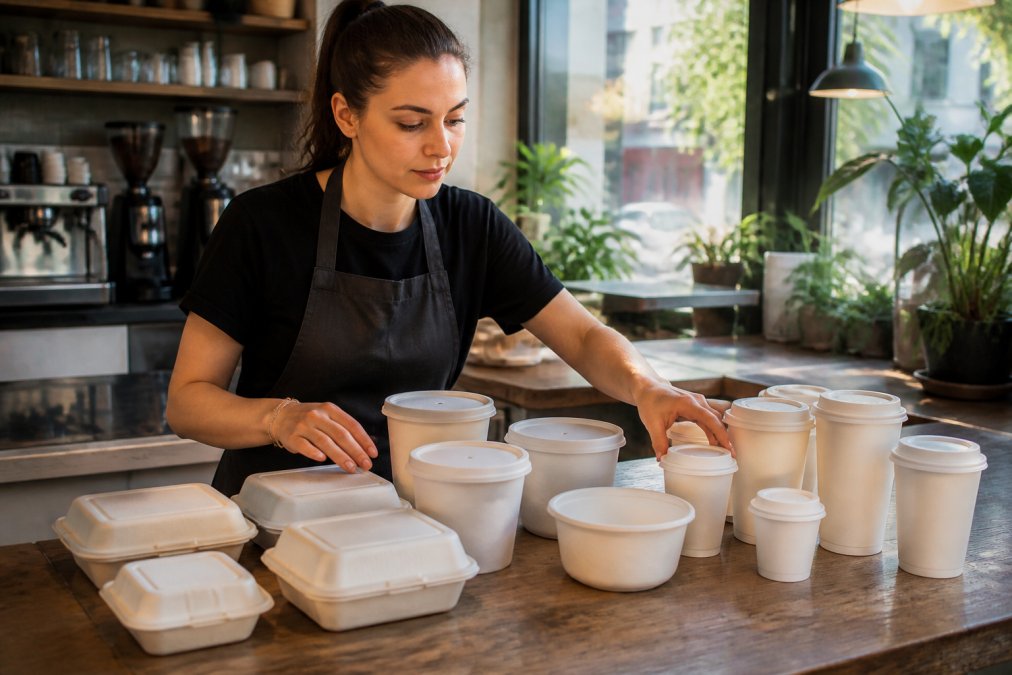
Use packaging with both heat-resistant and grease-resistant liners. Biodegradable Packaging AU's BioBoard range uses Ingeo liners that handle both requirements, making them suitable for hot foods, soups, and anything with oil or fat. The 780ml Noodle Boxes are specifically designed for hot foods and perform reliably across typical cafe temperatures.
Cold Items and Moisture Control
Cold items create condensation problems. When cold drinks or food sit in compostable containers, moisture builds up inside. If the liner isn't designed for moisture control, the cardboard base can soften and the container can fail structurally.
Compostable cup liners need to handle both moisture and liquid pressure. Some plant-based liners absorb moisture over time, weakening the container. Others resist moisture without relying on plastic coatings.
For cold beverages, use a cup with a moisture-resistant liner. Biodegradable Packaging AU's White Double Wall BioCups are certified to AS5810 and use an aqueous water-based coating that resists moisture without compromising compostability. The double wall also provides insulation, reducing exterior condensation.
Cold food containers need similar moisture control. Test packaging with your actual menu items before committing to large orders.
Commercial Composting Services for Cafes
After the customer leaves with their takeaway, what happens to the packaging? If it goes into general waste, it ends up in landfill regardless of certification. If it goes into organic waste, it only gets composted if your council has an industrial composting facility that accepts food-soiled packaging.
End-of-life logistics are critical for waste diversion. You must verify with your local council that it accepts compostable packaging, don't assume.
Most industrial composting facilities in Australia now accept certified compostable packaging, but rules vary. Some accept food-soiled packaging; others require it to be clean. Some have temperature protocols that exclude certain liners. Contact the facility directly or work with a supplier who's already done that legwork.
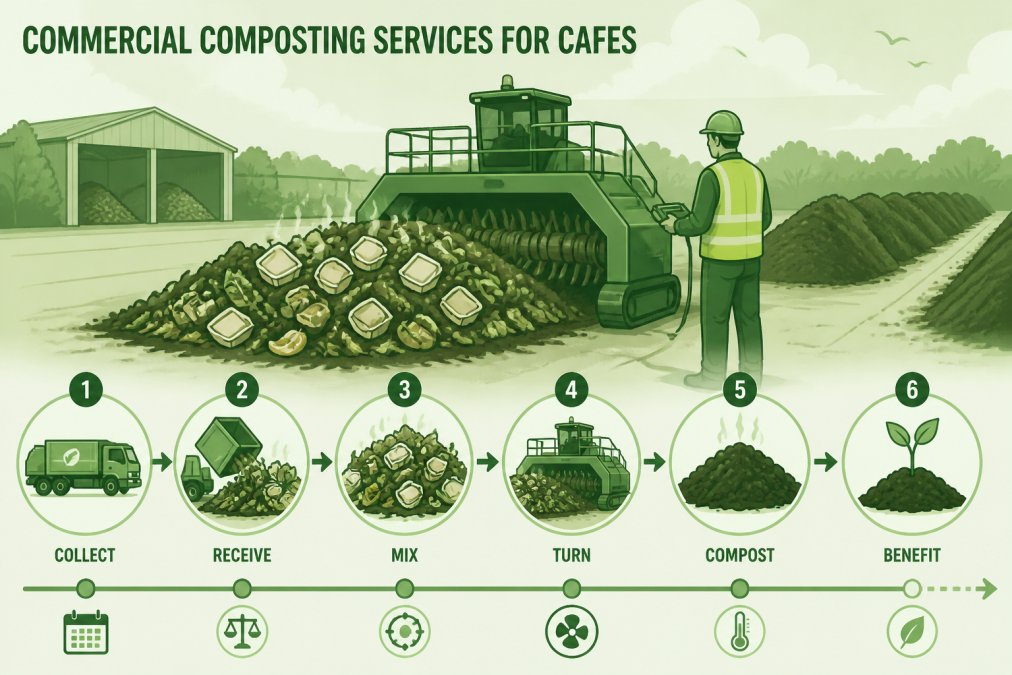
Biodegradable Packaging AU works with Compost Connect to help businesses access local composting services.
Verifying Genuine Certifications and Avoiding Greenwashing
Greenwashing in compostable packaging is rampant. Many suppliers use vague terms like "eco-friendly," "biodegradable," or "natural" without third-party certification. Some carry fake or outdated certifications; some are certified to international standards that don't apply in Australia.
The only certifications that matter for Australian compostable packaging are AS5810 (home compostable) and AS4736 (industrial compostable). These are Australian standards, tested by independent labs, and recognised by Australian composting facilities.
How to verify:
- Ask your supplier for the certification number (should be on packaging or documentation).
- Check the certification against the Australian Standards database or contact the certifying body directly.
- Confirm that your council's facility accepts that certification.
- Look for third-party certification logos, legitimate certifications are stamped by independent bodies, not just claimed by suppliers.
Red flags include suppliers who can't provide certification numbers, who claim certifications without documentation, or who use international standards without Australian equivalents.
Biodegradable Packaging AU's products come with full certification documentation. Every product listing includes the standard it's certified to, and we provide certification numbers and testing reports on request.
Cost-Benefit Analysis: What Sustainable Packaging Actually Costs
The most common objection to compostable packaging is cost. Yes, it's more expensive than conventional plastic. The question is whether the price difference justifies the investment.
Conventional single-use plastic costs around $0.05-0.10 per container. Compostable alternatives typically cost $0.12-0.25 per unit, a 50-150% premium depending on material, size, and order volume.
But the cost-benefit picture is more complex:
Avoided fines and compliance costs. Non-compliance with the plastic ban carries penalties. Switching now avoids those costs later.
Brand positioning. Cafes using visibly compostable packaging attract environmentally conscious customers, improving loyalty and word-of-mouth marketing.
Supply chain efficiency. Compostable packaging from reliable suppliers reduces risk of unavailability or price spikes.
Waste management savings. Some councils offer lower disposal fees for organic waste.
Customer perception. Packaging signals brand values that resonate with many customers.
Biodegradable Packaging AU's pricing is competitive: Small BioBoard Lunch Boxes are $69.55 per 100 units ($0.70 per unit), Large Catering Trays are $45.40 per 100 units ($0.45 per unit), and Noodle Boxes are $156.45 per 100 units ($1.56 per unit).
For a small cafe serving 150 customers per day with 1.5 items per customer, the daily packaging cost difference is roughly $30-50, or $150-250 weekly. Over a year, that's $7,800-13,000 in additional costs. Whether that's worth it depends on your margins, customer base, and brand positioning.
Conclusion
The 2026 plastic ban isn't a choice anymore, it's a regulation. Cafes that thrive under this change aren't scrambling at the last minute. They've built relationships with suppliers, verified certifications, and integrated compostable packaging into operations.
Compostable packaging works when three conditions are met: the packaging is certified to an Australian standard, your local composting facility accepts it, and you've chosen the right material for your menu. Get any of these wrong, and you're paying for sustainable packaging that doesn't actually get composted.
At Biodegradable Packaging AU, our packaging is certified to AS5810 or AS4736, we work with Compost Connect to facilitate access to local composting services, and we provide custom branding options so your sustainability commitment becomes part of your brand story. With free Melbourne metro delivery on orders over $200 and bulk pricing that makes the cost difference manageable, switching to certified compostable packaging is now practical.
Get started with Biodegradable Packaging AU and ensure your takeaway packaging actually supports the circular economy.
Frequently Asked Questions
What's the difference between home and industrial compostable packaging? Home compostable (AS5810) breaks down in backyard compost within 12 months at lower temperatures. Industrial compostable (AS4736) requires commercial facilities at higher temperatures and breaks down in 90-180 days. Most cafes use industrial compostable because home composting doesn't reach required temperatures.
How do I know if my council's composting facility accepts compostable packaging? Contact your local council's waste management team or the composting facility directly. Ask whether they accept food-soiled packaging certified to AS4736 or AS5810. Biodegradable Packaging AU can also help verify compatibility with your local facility.
Is compostable packaging more expensive than plastic? Yes, typically 50-150% more per unit. Bulk orders reduce per-unit costs significantly. For a small cafe, additional weekly cost is usually $150-250, which may be justified by brand positioning, compliance, and customer loyalty.
Can I use the same compostable packaging for hot and cold items? Not always. Hot foods require heat-resistant liners; cold items need moisture-resistant liners. Some packaging like Biodegradable Packaging AU's BioBoard range handles both, but verify with your supplier before ordering.
What happens if compostable packaging ends up in landfill? It will eventually decompose, but much more slowly than in a composting facility. In landfill, it's wasted, the whole point of compostable packaging is rapid breakdown in the right environment. End-of-life logistics matter.
According to the Australian Government's Department of Climate Change, Energy, Environment and Water, the 2026 plastic ban enforces restrictions on single-use plastics across hospitality and foodservice sectors, making certified compostable packaging essential for compliance.
Research from Compost Connect, Australia's leading commercial composting network, shows that industrial composting facilities across Australia now accept certified AS4736 packaging, though acceptance varies by facility and region. Verification with your local facility is critical before committing to a packaging supplier.
The Australian Standards organisation's guidance on compostable packaging standards clarifies the difference between AS5810 and AS4736 certifications and their application in food service environments. Understanding these standards is essential for ensuring your packaging will be accepted and processed at end-of-life.
Frequently Asked Questions
What's the difference between AS5810 home compostable and AS4736 industrial compostable packaging?
AS5810 certified packaging breaks down in home compost conditions (lower temperatures, smaller scale) within 12 months. AS4736 requires industrial composting facilities with controlled temperature and moisture. Most cafes use AS4736 because home composting isn't reliable at scale. Check your local council's accepted materials, many only accept AS4736 in their collection systems. Biodegradable Packaging AU offers products certified to AS5810 and AS4736, giving you options depending on your waste stream access.
How do I know if compostable packaging is actually certified and not greenwashing?
Look for third-party certification symbols on packaging: AS5810 or AS4736 marks from recognised certifiers. Check the supplier's documentation, ask for a certificate of compliance, not just marketing claims. Genuine certification includes batch testing and ongoing audits. Verify the certifier's name (not vague terms like 'eco-friendly'). Biodegradable Packaging AU provides full certification details for every product. Never rely on branded language alone; demand proof.
Will compostable packaging actually get composted, or will it end up in landfill anyway?
That depends entirely on your local council's waste system. Contact your council's waste team to confirm they accept compostable packaging in their collection service. Some regions have dedicated composting infrastructure; others don't. Food-soiled packaging is often rejected from standard recycling, so compostable options prevent landfill. Once certified packaging enters a facility accepting it, industrial composting breaks it down within 12 weeks. The risk is real: if your council doesn't accept it, packaging will landfill. Verify acceptance before committing to compostable supplies.
Is the extra cost of compostable packaging worth it for a small cafe?
Costs vary by volume and material. Biodegradable Packaging AU's small BioBoard lunch boxes start at $69.55 per 100 units, whilst our 8oz BioCups are $199.95 per 1000. Compare against your current supplier's pricing per unit. Benefits include regulatory compliance ahead of 2026, reduced waste management fees (many councils charge less for diverted organic waste), and customer appeal, sustainability attracts premium customers willing to pay slightly more. Calculate your annual volume, factor in free delivery over $200, and compare total cost of ownership, not unit price alone.
This article was written using GrandRanker