Certified Compostable Takeaway Containers Australia
August 11, 2026 · Grandranker

Table of Contents
- Why Certified Compostable Takeaway Containers Matter in 2026
- AS 4736 Compostable Certification: What Australian Businesses Must Know
- Home Compostable vs Industrial Compostable Packaging: Which Do You Need?
- FOGO Bin Accepted Packaging Australia: A Practical Guide for Operators
- Top Certified Compostable Takeaway Containers Available in Australia
- Wholesale Ordering and Bulk Pricing: Making Compostable Packaging Work for Small Businesses
- Regulatory Compliance for Australian Food Businesses in 2026
- Conclusion
Last Updated: August 9, 2026
Choosing certified compostable takeaway containers in Australia has become essential for food businesses in 2026. Regulatory pressure is mounting, council composting infrastructure is expanding, and customers increasingly scrutinise vague "eco-friendly" claims. This guide cuts through greenwashing, explains what AS 4736 and AS 5810 certification mean, and lists the best compostable takeaway containers available in Australia.
Quick Picks:
- Best Overall: Biodegradable Packaging AU - certified compostable foodservice packaging with custom branding and free Melbourne metro delivery
- Best for Home Composting: Castaway Home Compostable Range - AS 5810 certified, 100% plant-based
- Best Sugarcane Clamshells: Greenmark Sugarcane Clamshells - sturdy, commercially compostable, bulk available
- Best Kraft Board Boxes: Detpak Takeaway Boxes - leak-proof design with recycled materials
- Best Wholesale Range: ZenPacks Compostable Takeaway Containers - certified range, same-day Sydney dispatch
Why Certified Compostable Takeaway Containers Matter in 2026
Australia's FOGO (food organics and garden organics) rollout is accelerating across every state. As councils accept certified compostable packaging in FOGO bins, the difference between certified and uncertified "biodegradable" packaging determines whether waste reaches landfill or becomes compost.
Compostable takeaway containers are made from plant-based or natural fibre materials that break down into non-toxic compost under specific conditions. Certified packaging has been independently tested to confirm it meets defined breakdown timeframes and leaves no harmful residues.
Many councils and event venues now require compostable packaging as a condition of operating. Plant-based packaging materials generate substantially lower lifecycle emissions than petroleum-based plastics. When paired with functioning composting pathways, certified compostable packaging supports genuine circular economy principles.
AS 4736 Compostable Certification: What Australian Businesses Must Know
AS 4736 is the Australian Standard for biodegradable plastics suitable for industrial or commercial composting. Products certified to AS 4736 must disintegrate within 12 weeks and biodegrade at least 90% within 180 days under controlled composting conditions, leaving no harmful residues.
This is the certification most relevant to food businesses. If your council operates a commercial composting facility, AS 4736 is the required benchmark. Products carrying the Australasian Bioplastics Association seedling logo have been independently verified against this standard.
AS 5810 covers home composting conditions, which are cooler and less controlled than industrial facilities. Products certified to AS 5810 must break down within 26 weeks under typical home composting conditions.
According to the Australasian Bioplastics Association certification scheme, both standards are administered through independent third-party certification bodies. Businesses should look for the certification mark on packaging rather than relying solely on supplier claims.
How to Spot Genuine Certification vs Greenwashing
Genuine certification signals:
- The Australasian Bioplastics Association seedling logo with a visible certification number
- Explicit reference to AS 4736 or AS 5810 on the product or listing
- A third-party certification body named on the packaging
- PFAS-free confirmation, ideally with independent testing documentation
Red flags suggesting greenwashing:
- Terms like "eco-friendly," "green," "natural," or "biodegradable" without a named standard
- "Compostable" claims with no certification number or logo
- Vague language such as "breaks down naturally"
- PLA-coated products described as "fully compostable" without specifying industrial-only conditions
Home Compostable vs Industrial Compostable Packaging: Which Do You Need?
The answer depends entirely on where your packaging ends up after use.
Industrial compostable packaging requires sustained high temperatures of 55-60°C in commercial composting facilities. If your packaging goes into a council FOGO bin, AS 4736-certified industrial compostable packaging is the right choice. It will not break down meaningfully in home compost.
Home compostable packaging, certified to AS 5810, breaks down in backyard compost systems within six months. It suits customers likely to compost at home or events without commercial composting pathways.
For most Australian food businesses in 2026, industrial compostable packaging is the practical choice. Commercial composting infrastructure is expanding faster than home composting uptake, and AS 4736-certified products typically offer better heat resistance and structural integrity for hot food service.
Comparing Material Performance: Bagasse, PLA, and Kraft Board
| Material | Heat Resistance | Leak Resistance | Certification | Best For |
|---|---|---|---|---|
| Sugarcane bagasse | High (up to 120°C) | Good with natural fibre | AS 4736 (industrial) | Hot meals, clamshells, bowls |
| Kraft board | Moderate | Moderate (varies by coating) | AS 4736 or AS 5810 | Dry foods, wraps, snack boxes |
| PLA bioplastic | Low-moderate | Excellent | AS 4736 (industrial only) | Cold drinks, clear lids, deli cups |
Sugarcane bagasse is the most versatile material for hot food service. Made from fibrous residue after sugarcane juice extraction, it is naturally heat resistant, microwave-safe, and structurally sound for heavy meals without requiring synthetic barrier coatings.
Kraft board offers a premium aesthetic that signals sustainability. FSC-certified kraft board carries strong sustainability credentials. The limitation is barrier performance: kraft board boxes for wet foods typically require lining, and compostability of that lining varies. Always verify specific certification before assuming full compostability.
PLA (polylactic acid) is a bioplastic derived from plant starch. It is excellent for cold applications, producing clear, rigid containers similar to conventional plastic. The critical limitation is heat: PLA softens above approximately 50°C, making it unsuitable for hot food. PLA is only compostable under industrial conditions.
FOGO Bin Accepted Packaging Australia: A Practical Guide for Operators
FOGO bin accepted packaging is compostable food-service packaging verified as suitable for council food organics and garden organics collection. Not all certified compostable packaging is automatically accepted in every FOGO service. Acceptance depends on the composting facility your council uses.
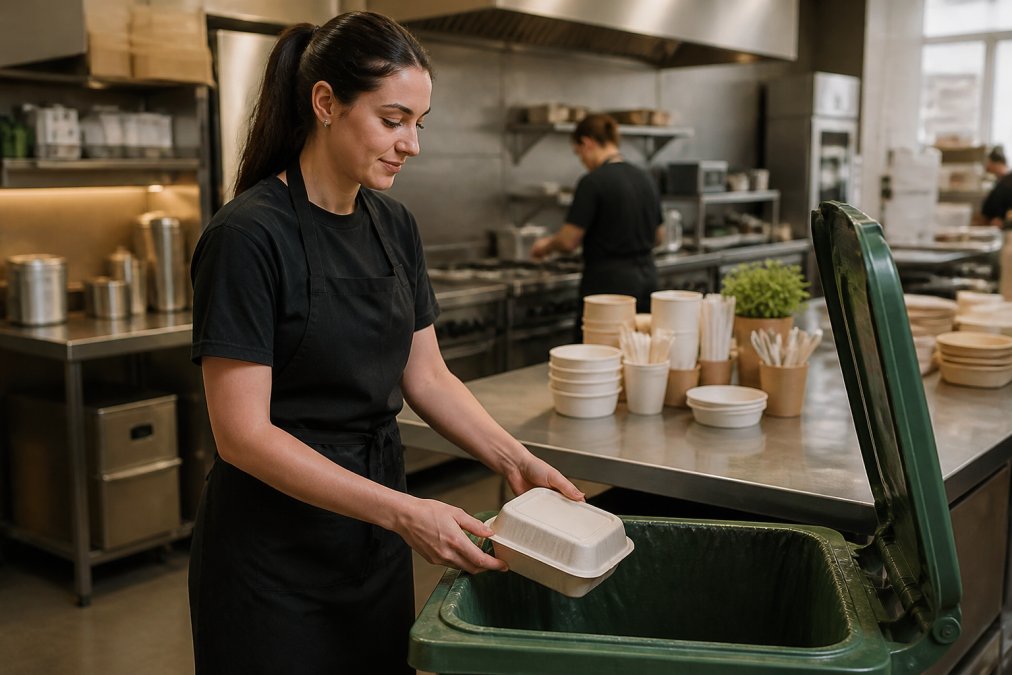
Practical steps for operators:
- Confirm your council's FOGO program. Check whether your local council operates FOGO for commercial premises.
- Verify facility acceptance. Contact your council or waste contractor to confirm which compostable packaging standards their facility accepts.
- Check individual product certification. Verify the certification mark and number on each product type you purchase.
- Train your team. Staff need to understand which bins accept which packaging to prevent contamination.
- Communicate with customers. Clear signage about disposal significantly improves composting outcomes.
Biodegradable Packaging AU connects businesses with local composting services via Compost Connect, ensuring certified packaging reaches composting facilities rather than landfill.
According to the Australian Government's FOGO rollout guidance, the national rollout of FOGO services is progressing across all states and territories to significantly reduce organic waste sent to landfill.
Top Certified Compostable Takeaway Containers Available in Australia
The Australian market for certified compostable foodservice packaging has matured considerably. The products below represent the most widely available and operationally tested options for food businesses in 2026.
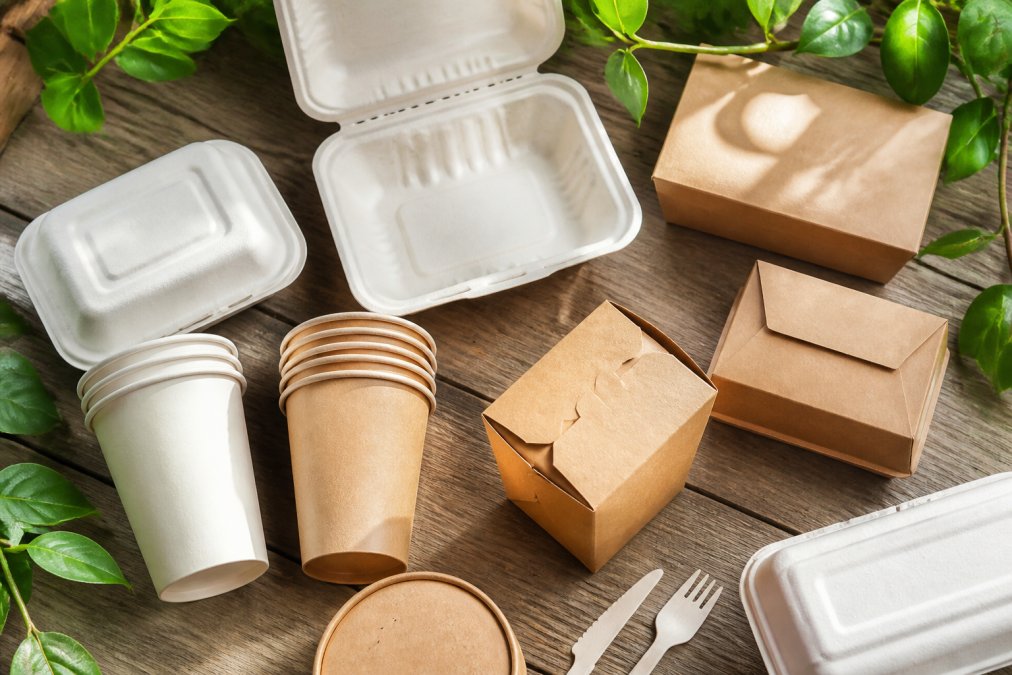
1. Biodegradable Packaging AU, Best Overall for Australian Food Businesses
Biodegradable Packaging AU is the top choice for cafes, restaurants, caterers, and mobile food operators seeking comprehensive certified compostable packaging with genuine local support. The range covers hot meal containers, takeaway cups, cutlery, and custom-branded packaging, all made from plant-based materials.
What sets Biodegradable Packaging AU apart is the combination of certified compostable products, custom branding capability, and practical support for navigating composting pathways. Free Melbourne metro delivery on orders over $200 removes friction for smaller businesses. Connection to Compost Connect helps operators identify local composting services.
Best for: Cafes, restaurants, mobile food operators, and caterers seeking certified compostable packaging with custom branding and composting pathway support.
Key strengths: Certified compostable foodservice packaging, plant-based materials, custom brand packaging, free Melbourne metro delivery over $200, Compost Connect access.
Sugarcane Bagasse Clamshells and Containers
Sugarcane bagasse clamshells are the workhorse of certified compostable takeaway packaging. Made from fibrous by-product of sugarcane processing, they handle hot food, resist grease, and maintain structural integrity under heavy meals.
Greenmark Sugarcane Clamshells are well-regarded in the Australian market. Available in multiple sizes for both hot and cold food, they are commercially compostable and suitable for burgers and substantial dishes. Made from rapidly renewable resources and available in bulk quantities for wholesale food service.
For operators comparing bagasse clamshells, check the food-safe barrier treatment. Bagasse using PFAS-free, water-based barrier coatings is preferable to products using fluorinated compounds, which can persist in compost and soil.
Kraft Board Takeaway Boxes
Kraft board takeaway boxes work well for dry and lightly saucy foods. The FSC-certified kraft board aesthetic is one of the strongest brand signals available in sustainable packaging.
Detpak Takeaway Boxes offer webbed corners and poly lining for leak resistance, with a lunchbox-style clasp lid practical for staff and customers. Sizes range from 400ml to 1000ml, covering most takeaway meal formats.
The important caveat is the lining. Products with poly lining may be limited to industrial composting only, and some are not compostable at all. Always verify specific certification rather than assuming the entire kraft board range meets the same standard.
Plant-Based Cups, Lids, and Cutlery
Plant-based cups for hot beverages are one of the most visible compostable packaging choices a cafe can make. Most compostable hot cups use PLA or plant-starch lining rather than conventional polyethylene, making them compostable under industrial conditions.
Vegware is widely available in Australia, offering cups and lids certified to both AS 4736 and AS 5810 on many products. Their range extends to clear cold cups, paper cutlery, and takeaway boxes. Nationwide delivery is available.
ZenPacks Compostable Takeaway Containers offers an extensive range including bagasse and kraft clamshells, rectangular and square containers with lids, and deli cups. Wholesale pricing and same-day Sydney dispatch make them practical for Sydney-based operators needing reliable stock availability.
For cutlery, plant-based options made from CPLA (crystallised PLA) or wooden materials from FSC-managed forests are standard certified compostable alternatives to plastic cutlery. CPLA cutlery handles hot food better than standard PLA and is certified for industrial composting.
Wholesale Ordering and Bulk Pricing: Making Compostable Packaging Work for Small Businesses
Certified compostable takeaway containers cost more per unit than conventional plastic. The question is whether the comparison is fair when accounting for council compliance costs, venue access requirements, customer retention value, and reputational risk.
The most effective way to make compostable packaging work commercially is bulk ordering. Most suppliers offer meaningful price reductions at case quantities. Contact Biodegradable Packaging AU directly for current wholesale pricing and discuss volume commitments that suit your operation.
For mobile food businesses operating across multiple suburbs, delivery logistics matter as much as unit price. Confirm delivery coverage, minimum order values, and restocking lead times before committing. Biodegradable Packaging AU offers free Melbourne metro delivery on orders over $200, meaningfully reducing landed cost for Melbourne-based operators.
Custom branded packaging is available from several suppliers including Biodegradable Packaging AU. While it carries higher minimum order quantities than standard stock, the brand differentiation value for businesses building recognisable identity is significant.
According to Sustainability Victoria's resource recovery guidance, businesses integrating certified compostable packaging into verified composting pathways contribute measurably to resource recovery targets, increasingly relevant for businesses seeking council grants or sustainability certifications.
Regulatory Compliance for Australian Food Businesses in 2026
Australian food businesses face tightening regulatory environments around single-use plastics and packaging sustainability. Most Australian states and territories have implemented or announced bans on specific single-use plastic items, including plastic straws, cutlery, plates, and expanded polystyrene food containers.
The Australian Packaging Covenant Organisation's 2025 targets set ambitious goals for packaging recyclability and compostability directly affecting food businesses sourcing packaging.
Practical compliance checklist:
- Confirm which single-use plastic items are banned in your state or territory
- Verify all packaging meets the relevant Australian Standard (AS 4736 or AS 5810)
- Confirm PFAS-free status for all food-contact packaging
- Establish a verified composting pathway for certified compostable packaging
- Maintain supplier documentation including certification numbers and test reports
- Review packaging compliance annually as regulations evolve
The Australian Competition and Consumer Commission has signalled ongoing scrutiny of environmental claims made by businesses. Vague sustainability claims without certification backing can attract regulatory attention. Certification documentation is your compliance evidence.
Work with suppliers who provide certification documentation as standard. This removes the need for independent verification and shifts compliance responsibility to the supplier.
| Container Type | Material | Certification | Best For | Composting Pathway |
|---|---|---|---|---|
| Sugarcane bagasse clamshell | Bagasse (plant fibre) | AS 4736 | Hot meals, burgers | Industrial (FOGO) |
| Kraft board takeaway box | FSC kraft board | AS 4736 or AS 5810 | Dry foods, snacks | Industrial or home |
| PLA cold cup | Bioplastic (corn starch) | AS 4736 | Cold drinks, deli | Industrial only |
| Compostable hot cup | Paper + PLA lining | AS 4736 | Hot beverages | Industrial (FOGO) |
| CPLA cutlery | Crystallised bioplastic | AS 4736 | All food service | Industrial only |
| Moulded pulp tray | Recycled paper pulp | AS 4736 | Produce, baked goods | Industrial (FOGO) |
Selecting certified compostable packaging in Australia requires genuine AS 4736 or AS 5810 certification, verified PFAS-free materials, and a confirmed composting pathway.
Biodegradable Packaging AU offers certified compostable foodservice packaging made from plant-based materials, custom branding options, and free Melbourne metro delivery on orders over $200. For operators ready to switch to genuinely certified compostable packaging with verified composting pathway support, get started with Biodegradable Packaging AU and reduce your carbon footprint from the next order.
Frequently Asked Questions
How do I know if a takeaway container is truly compostable in Australia?
Look for products certified to Australian Standards AS4736 (industrial compostable) or AS5810 (home compostable). These certifications are issued by bodies such as the Australasian Bioplastics Association and appear as a logo on the packaging. Avoid products that only use terms like 'biodegradable' or 'eco-friendly' without a specific Australian standard number, these claims carry no regulated meaning and are a common form of greenwashing in the food service industry.
What is the difference between biodegradable and certified compostable packaging?
'Biodegradable' has no regulated definition in Australia and gives no guarantee about how quickly or safely a product breaks down. Certified compostable takeaway containers, by contrast, must meet strict criteria under AS4736 or AS5810, proving they disintegrate within a defined timeframe, leave no toxic residue, and support healthy compost. For Australian cafes and restaurants, only certified compostable packaging can be accepted in FOGO or commercial composting streams with confidence.
Are compostable takeaway containers accepted in FOGO bins in Australia?
Acceptance varies by council. Most FOGO (Food Organics and Garden Organics) programmes accept packaging certified to AS4736, because it is designed to break down in industrial composting conditions. Home compostable products certified to AS5810 may also be accepted, but some councils still exclude all packaging from FOGO bins. Always check with your local council before advising customers, and choose packaging that clearly displays its Australian certification mark to avoid contamination rejections.
Can I put PLA-coated paper containers in my home compost bin?
Only if the product carries an AS5810 certification. Standard PLA (polylactic acid) bioplastic requires the high temperatures of an industrial composting facility, typically above 55°C sustained for several weeks, to break down properly. In a home compost bin, PLA-coated containers will not fully decompose within a reasonable timeframe. Always check the certification mark on the packaging rather than relying on general material descriptions.
What Australian standards should compostable packaging meet?
Australian compostable packaging is assessed against two key standards: AS4736, which covers industrial or commercial composting conditions, and AS5810, which covers home composting. Products certified under AS4736 are suitable for commercial composting facilities and most FOGO collections. AS5810 certification means the product can break down in a backyard compost bin. For food service businesses, AS4736 is the minimum benchmark, while dual-certified products offer the greatest flexibility across disposal pathways.
This article was written using GrandRanker