Are Stainless Steel Cups Worth It? 2026 Review
August 27, 2026 · Editorial Team

Table of Contents
- The Core Case: Are Stainless Steel Cups Worth It?
- Durability and Long-Term Cost Efficiency
- Benefits of Stainless Steel Drinkware
- Addressing the Metallic Taste Problem
- How to Clean Stainless Steel Cups
- Stainless Steel vs Glass Cups: Which Wins?
- Environmental Impact and Sustainability
- The Verdict: Who Should Invest in Stainless Steel?
Last Updated: August 27, 2026
The Core Case: Are Stainless Steel Cups Worth It?
Whether stainless steel cups are worth it depends on your priorities and use case. If you value durability, temperature retention, and environmental impact, yes. If you want the cheapest option now, probably not. The real question isn't whether they're worth it in isolation, but whether they're worth it compared to what you're replacing.

For a cafe owner currently buying thousands of single-use cups annually, or a business looking to reduce environmental footprint, the investment becomes clearer. At Biodegradable Packaging AU, we've worked with hospitality businesses across the country to evaluate this decision, and the pattern is consistent: businesses that commit to reusable stainless steel cups see measurable benefits within months.
Durability and Long-Term Cost Efficiency
A quality stainless steel cup lasts 5 to 10 years with normal use, surviving thousands of uses, concrete floors, industrial dishwashers, and temperature extremes. A single-use cup serves once and becomes waste. A cafe going through 500 cups per day generates significant ongoing costs; with reusable stainless steel, that number drops dramatically once you establish a return system.
The cost-per-use calculation is decisive. A single-use cup costs pennies but requires thousands purchased annually. A stainless steel cup costs around $30 to $35 upfront but spreads across years of use, working out to fractions of a cent per drink served for a busy cafe.
The efficiency gain extends beyond per-use cost. You eliminate constant reordering, inventory management for thousands of disposable cups, and storage space. You manage a fixed asset cycling through your operation, reducing administrative overhead and simplifying logistics.
| Cost Factor | Single-Use Cups | Stainless Steel Cups |
|---|---|---|
| Per-unit cost | $0.05-0.15 | $30-35 |
| Annual volume (500/day) | 182,500 cups/year | 100-200 cups total |
| Annual spend (cups only) | $9,125-27,375 | One-time investment |
| Lifespan | Single use | 5-10 years |
| Cost per use (5-year horizon) | $0.05-0.15 | $0.03-0.07 |
Benefits of Stainless Steel Drinkware
Temperature Retention and Thermal Performance
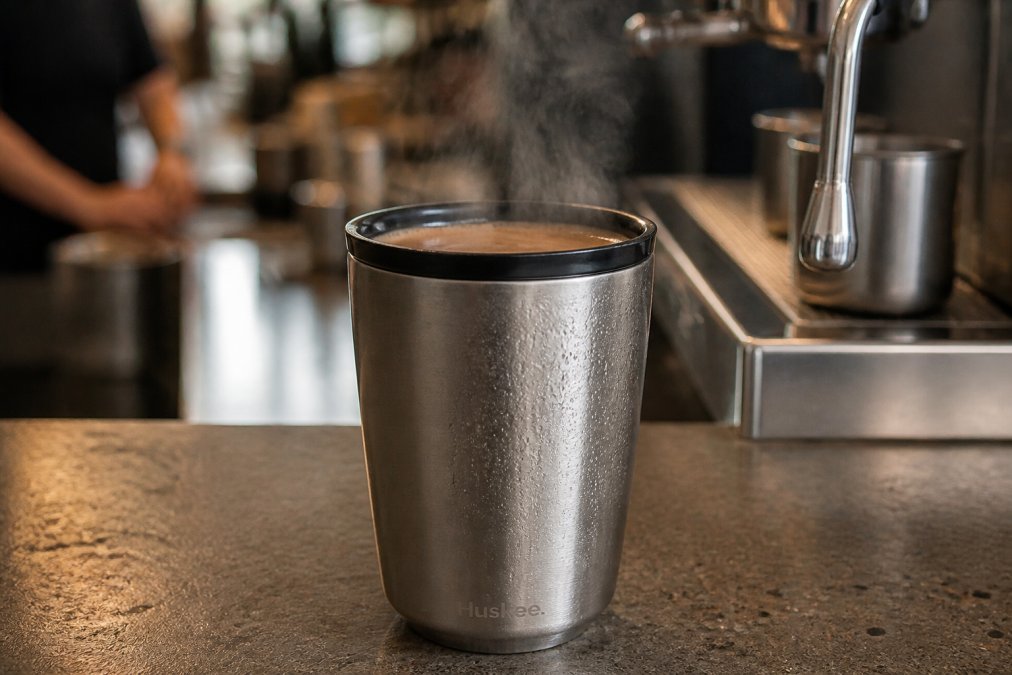
The most noticeable benefit is temperature maintenance. A quality stainless steel cup keeps hot drinks hot for 6 to 12 hours and cold drinks cold for 24+ hours through vacuum insulation, where two walls of stainless steel are separated by air or foam, minimising heat transfer.
This matters operationally. A customer with a hot drink at 8 AM still has one at 11 AM, more likely to finish it satisfied. Cafes experience fewer complaints and better customer experience without additional effort. You can also prepare drinks ahead of peak times without worrying about cooling.
Non-Reactive Material for Beverage Safety
Food-grade stainless steel is non-reactive, meaning it doesn't interact chemically with beverages. Acidic drinks like coffee and tea can leach metals from reactive containers, but stainless steel resists this through its corrosion resistance. The chromium and nickel content forms a protective oxide layer preventing leaching even with acidic or hot liquids.
For businesses serving food and beverages, this means customers receive a genuinely safer product with no metallic taste, chemical residue, or health concerns. This is why food-grade stainless steel is standard in professional kitchens.
Addressing the Metallic Taste Problem
The metallic taste some users report is real but avoidable. It typically comes from oxidation or residual manufacturing oils and particles. Before first use, wash thoroughly with warm soapy water, rinse multiple times, and some users recommend filling with hot water and letting it sit 10-15 minutes before rinsing again.
For ongoing use, regular cleaning prevents oxidation and taste issues. A properly maintained cup won't develop metallic taste. Avoid leaving acidic beverages sitting in the cup for extended periods and ensure it's fully dried after washing.
If metallic taste occurs in an established cup, the interior surface has begun to oxidize, usually from aggressive scrubbing or chemical exposure. Once this occurs, the taste is difficult to eliminate, making prevention through proper care essential.
How to Clean Stainless Steel Cups
For daily cleaning, hand wash with warm water and mild dish soap using a soft cloth. Avoid abrasive scrubbers that scratch the surface and compromise the protective oxide layer. Rinse thoroughly and dry immediately to prevent water spots.
For stubborn stains or odor, make a paste with baking soda and water, apply to the interior, let sit 15 minutes, scrub gently, and rinse thoroughly.
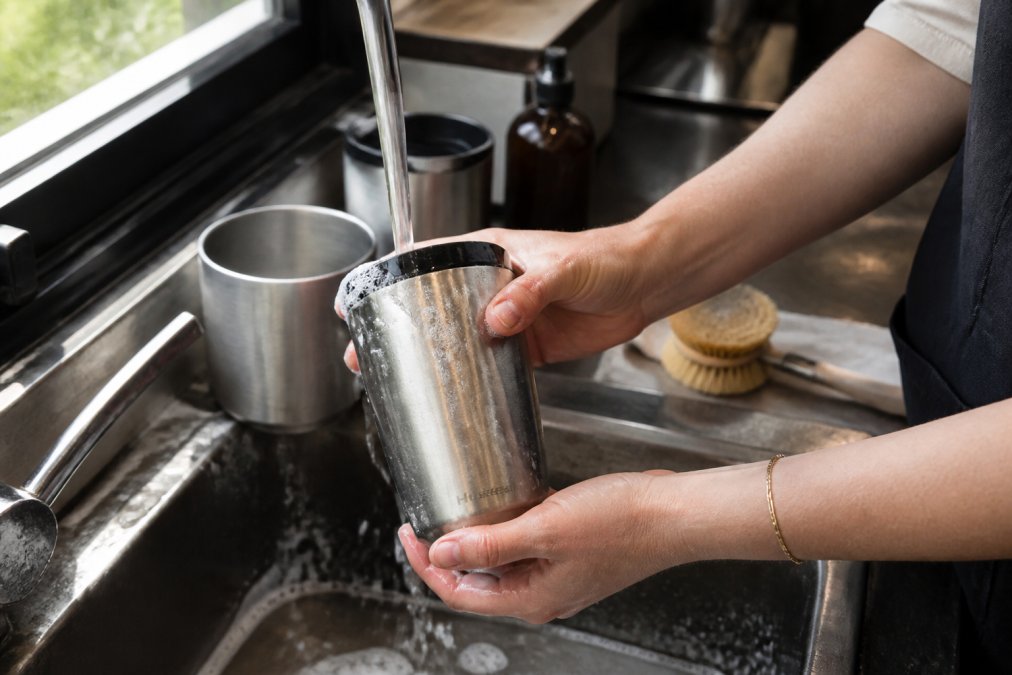
Most cups are dishwasher safe, but hand washing is gentler. If using a dishwasher, place on the top rack away from the heating element. For commercial settings, a three-stage process works best: rinse immediately after use, wash in hot soapy water, then rinse and air dry.

Never use bleach or harsh chemicals, which damage the surface. Vinegar can remove mineral deposits from hard water but use sparingly and rinse thoroughly.
Stainless Steel vs Glass Cups: Which Wins?
Glass offers transparency and is completely inert, making it preferred for home use or settings where visual appeal matters. However, glass is fragile and breaks easily, meaning higher replacement costs and safety risks in busy cafes. Glass also doesn't insulate, so hot drinks cool quickly and cold drinks warm up.
Stainless steel solves durability and insulation problems. It's shatterproof, maintains temperature, and lasts years. The trade-off is opacity, though this rarely matters commercially since customers see their beverage when poured.
For cost-per-use over time, stainless steel wins decisively. A glass cup might cost $5-10 but breaks frequently, raising total cost of ownership. A stainless steel cup costs more upfront but lasts years without replacement.
| Feature | Stainless Steel | Glass |
|---|---|---|
| Durability | Shatterproof, lasts 5-10 years | Fragile, breaks easily |
| Temperature retention | Excellent (6-12+ hours) | Poor (cools quickly) |
| Insulation | Double-walled vacuum insulation | None |
| Transparency | Opaque | Clear |
| Odor retention | Minimal with proper care | None |
| Cost per use (5 years) | $0.03-0.07 | $0.50-2.00+ |
| Best for | Commercial, on-the-go | Home, aesthetics |
Environmental Impact and Sustainability
Manufacturing a stainless steel cup requires energy and resources, but this cost distributes across years of use, dramatically changing the calculation. A single-use cup is manufactured, used once, and discarded, its entire environmental cost amortised across one use. A stainless steel cup is manufactured once and used thousands of times, making per-use environmental impact negligible over 5 to 10 years.
The bigger benefit is waste diversion. A cafe using 500 single-use cups daily generates 182,500 cups annually, most ending in landfill. Stainless steel eliminates this waste stream entirely. For multi-location businesses, this is significant environmental impact.
The reusable model also reduces demand for virgin materials. Each stainless steel cup replaces thousands of single-use alternatives over its lifetime, reducing mining pressure and manufacturing emissions.
However, environmental benefit only materialises if cups are actually reused. Infrastructure supporting returns is essential.
According to Australian Department of Climate Change, Energy, Environment and Water waste reduction guidelines, businesses transitioning to reusable systems can reduce waste by 70-90% when return systems are properly implemented.
The Verdict: Who Should Invest in Stainless Steel?
Invest in stainless steel if:
- You operate a cafe, restaurant, or food business with high daily volume
- You have infrastructure to manage returns (deposits, collection points, washing facilities)
- Your customer base values sustainability and quality
- You want to reduce waste and environmental impact
- You're willing to invest upfront capital for long-term savings
- You can commit to proper maintenance
Stainless steel may not be worth it if:
- You operate a very small business with minimal volume
- Your customers primarily want cheap, disposable options
- You lack infrastructure to manage returns
- You have limited upfront capital
- Your location lacks composting or waste management infrastructure
For most established hospitality businesses, the case is strong. Durability, temperature retention, and environmental benefits outweigh upfront cost when systems support reuse.
The Australian Packaging Covenant Organisation sustainability standards increasingly encourages reusable systems. This regulatory pressure, combined with consumer demand for sustainable options, makes stainless steel a strategic investment.
At Biodegradable Packaging AU, we work with businesses implementing reusable cup systems. Our HuskeeSteel cups are made from 91% post-consumer recycled stainless steel, combining durability with environmental responsibility. The 8oz and 12oz options are designed for commercial settings and highly customisable for brand visibility. For businesses in the Melbourne metro area, we provide free delivery on orders over $200.

The Ellen MacArthur Foundation circular economy principles demonstrate that reusable systems create value across environmental impact, customer loyalty, and operational efficiency. Stainless steel cups are one practical application.
Start with a pilot program, introduce reusable cups for a menu subset, and track return rates and customer response. Most businesses find the transition smoother than expected, with long-term benefits justifying initial investment. Ready to reduce your environmental footprint while improving your bottom line? Explore our range of HuskeeSteel reusable cups and discover how certified compostable packaging and premium stainless steel solutions can transform your business operations.
Frequently Asked Questions
Is it healthy to drink from a stainless steel cup?
Yes, food-grade stainless steel is safe for drinking. Properly manufactured stainless steel cups are non-reactive, meaning they won't leach harmful substances into your beverages. Look for cups made from 304 or 316-grade stainless steel, which meet food safety standards. HuskeeSteel cups, made from 91% post-consumer recycled stainless steel, are designed to be non-toxic and safe for daily use. The material doesn't interact with acidic drinks like coffee or juice, making it a reliable choice for health-conscious consumers.
What is the lifespan of a stainless steel cup?
Stainless steel cups typically last 5-10 years or longer with proper care. Their corrosion resistance and durability mean they withstand daily use, dishwasher cycles, and temperature changes far better than alternatives. Many users report their stainless steel cups remaining functional for a decade or more, making them a genuine long-term investment. Factors affecting lifespan include water quality (hard water can cause minor discolouration), cleaning method, and how frequently the cup is used. Premium options like HuskeeSteel are engineered for extended durability and customisation, supporting repeated use across cafe and hospitality settings.
Do stainless steel cups affect the taste of coffee?
A metallic aftertaste can occur if cups aren't properly seasoned or cleaned. New stainless steel cups may impart a subtle metallic flavour initially, but this typically disappears after a few uses and thorough rinsing. High-quality electropolished stainless steel reduces this effect significantly. To minimise metallic taste, rinse your cup thoroughly with hot water before use, avoid storing acidic beverages for extended periods, and clean immediately after use. Most users find that after the initial adjustment period, stainless steel cups deliver clean-tasting beverages without any noticeable flavour alteration, especially when used consistently.
How do stainless steel cups compare to glass for sustainability?
Stainless steel cups offer superior sustainability when measured over their full lifespan. Glass is recyclable but energy-intensive to produce and transport due to weight, whilst stainless steel can be recycled indefinitely without degradation. Recycled stainless steel, like the 91% post-consumer content in HuskeeSteel cups, significantly reduces manufacturing carbon footprint. Stainless steel's durability means fewer replacements and less waste over time. However, glass is completely inert and doesn't require coating maintenance. For hospitality businesses aiming to reduce environmental impact, stainless steel reusable cups divert more waste from landfill than single-use alternatives, supporting a circular economy approach.
Are stainless steel cups dishwasher safe?
Most quality stainless steel cups are dishwasher safe, though hand washing extends their lifespan. High-heat dishwasher cycles can cause minor discolouration or water spotting on brushed finishes, but won't compromise functionality or safety. To preserve appearance and thermal performance, many manufacturers recommend hand washing with mild soap and warm water. For cafe and hospitality use, HuskeeSteel cups are designed to withstand commercial dishwashing, making them practical for high-volume operations. If you do use a dishwasher, avoid abrasive scrubbers and dry immediately to prevent water spots and maintain the cup's visual appeal.
This article was written using GrandRanker